BELLA+CANVAS, a Los Angeles–based premium blank-apparel brand, completed its transition to new ownership by SanMar, a Washington-based wholesale supplier of imprintable apparel and accessories.
BELLA+CANVAS will remain independent under the leadership of executive vice president Megan Spire, whose nearly 15-year tenure with the brand “reflects the continuity, expertise, and deep knowledge guiding the company forward.”
BELLA+CANVAS products will continue to be available directly at bellacanvas.com, through BELLA+CANVAS’s network of long-standing local and regional distributor partners, and through SanMar, who will serve as the exclusive national wholesale distributor of BELLA+CANVAS products moving forward.
“The brand, the team, and the creative vision that built BELLA+CANVAS remain exactly where they belong, at the center of everything we do,” said Spire. “For our customers and partners, the message is simple: The people, products, and the brand they trust remain firmly in place. We’re excited about what lies ahead and focused on continuing to deliver the premium quality, product innovation, and design leadership that have defined BELLA+CANVAS from the beginning.”
The company said it also plans to roll out more than 20 new styles for 2027.
To locate an authorized BELLA+CANVAS distributor, visit bellacanvas.com/distributor-locator.
STAHLS’ recently released a free, downloadable version of its report, 2026 Print-on-Demand Industry Report: The Insider’s Guide to Scaling with On-Demand Printing.
The report delivers guidance from industry brand experts, technology innovators, and high-growth businesses that are successfully using print-on-demand to increase profitability, launch new products faster, and create exceptional customer experiences.
“Print-on-demand has evolved into one of the most accessible and profitable ways for businesses to grow,” said Josh Ellsworth, chief revenue officer at STAHLS’. “This report gives you direct access to the strategies, insights, and lessons learned from businesses that are leading the industry. It’s designed to help you avoid common pitfalls, identify new revenue opportunities, and confidently build a more scalable business.”
The report includes insights on:
How successful businesses are scaling profitably without carrying excess inventory
Best practices for optimizing production workflows, fulfillment, and customer experience
Opportunities for promotional product distributors to expand into on-demand decorated apparel and branded merchandise
For more information and to download the report, visit stahls.com/print-on-demand-industry-report-2026.
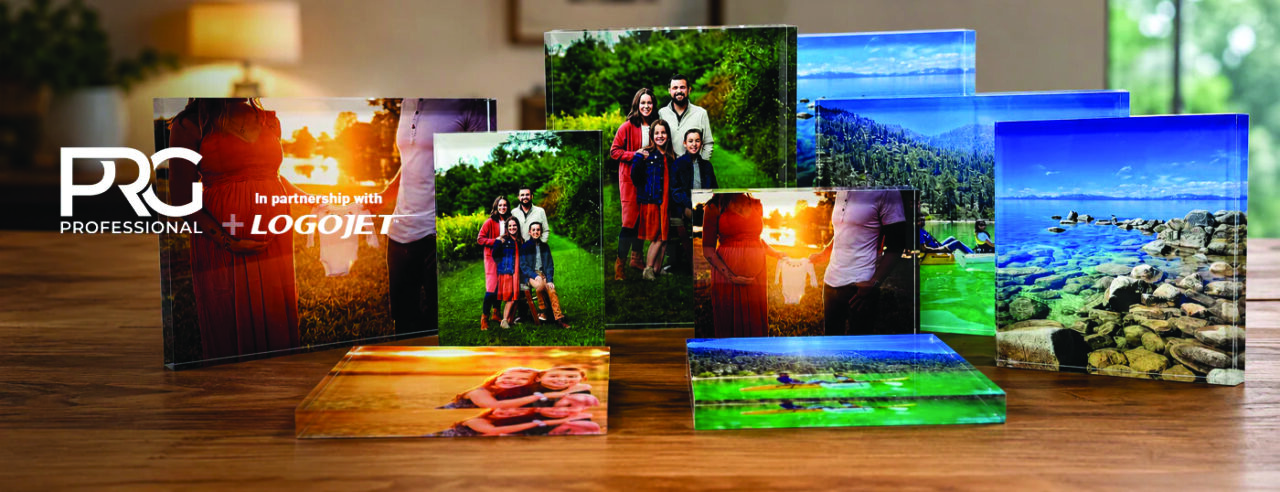
LogoJET recently announced a new partnership with PRG Professional to offer premium acrylic photo blocks as part of the company’s growing Blank Media Program.
The partnership provides LogoJET customers with access to high-quality acrylic photo blocks designed for vibrant UV-printing applications, allowing businesses to create premium personalized products on demand for photography, gifting, home decor, and corporate recognition markets.
“One of our goals is to help customers identify profitable applications they can produce immediately after installing a LogoJET printer,” said Susan Cox, CEO of LogoJET. “PRG Professional’s acrylic photo blocks provide a beautiful finished product that allows customers to expand into premium gifting, photography, and decor applications while maintaining the speed and flexibility of in-house production.”
When paired with LogoJET UV printers, acrylic photo blocks can be customized with photographs, artwork, logos, and personalized graphics to create and sell premium products. Applications range from wedding and family keepsakes to corporate awards, executive gifts, retail merchandise, and custom home decor.
PRG Professional acrylic photo blocks are compatible with LogoJET’s R-Series and Inspira Series UV printers and support direct-to-acrylic printing, white ink layering, and personalized short-run production.
All PRG Professional products are designed and manufactured in the Midwest.
The products are available immediately through LogoJET’s Blank Media Program.
For the 2024 FIDE World Chess Championship in Singapore, the award had to reflect the city’s manufacturing sophistication and design culture. The biennial event has yielded several exciting designs over the years, and the most recent trophy is no exception.
FIDE tapped Singapore-based brand RISIS to create the trophy, leaning more toward premium-luxury aesthetics than toward traditional industrial design. The result is a trophy that combines the detailed nature of chess pieces with intricate metalworking.
Built from a Single Material
According to RISIS, the trophy’s core material is aluminum finished with a gold anodization. That construction gives the appearance of precious metals without relying on a heavier multimaterial construction. Since aluminum is light relative to bronze or solid brass, easy to machine with precision, and well suited to contemporary trophy designs, the result on the FIDE trophy is crisp edges and a clean silhouette. The anodized gold finish also adds surface protection and color.
The Fabrication Process
RISIS describes the trophy as a combination of artistry, science, and heritage. Using aluminum with gold anodizing requires a production sequence that shapes the metal first and then treats the surface with anodization. This process thickens the natural oxide layer so the finish becomes part of the metal rather than a simple topcoat.
This surface treatment ensures that an award designed to be handled, transported, and displayed retains its finish without wearing like standard paint or plating.
Measured Precision
RISIS says the award measures 330 millimeters high, 122 millimeters wide, and 88 millimeters deep, with a total weight of 2.76 kilograms. These measurements place it in an ideal middle ground: substantial enough to feel important in hand, yet compact enough to preserve the design’s clean look.
GS2 Awards offers blazering classes at the Beyond the Beam Learning Center in Boulder, Colorado. These hands-on, two-day technical seminars are designed for personalization professionals looking to expand their capabilities and increase sales opportunities.
Blazering explores the innovative combination of laser-engraving and sand-carving technologies. Participants learn how to transform laser-etched glass projects into premium deep-carved pieces, creating new upselling opportunities and delivering greater value to customers.
Led by the experienced team at GS2 Awards, the seminars provide practical training on both technologies while allowing attendees to work on real-world applications. Participants also learn techniques for decorating materials that traditionally present challenges for laser engraving, including polished metals, brick, and ceramic glazes. By incorporating sandcarving processes, attendees can achieve striking results on a wider range of substrates.
For more information about upcoming blazering classes, contact GS2 Awards at 303.747.3869 or [email protected]. Learn more at gs2awards.com/pages/events-education.
STAHLS’ has added Siser, a global leader in heat transfer vinyl (HTV) and material innovation, to the STAHLS’ family of companies.
“STAHLS’ and Siser share a long history of working together to support apparel decorators through innovative products, industry education, and a commitment to customer success,” the company stated in the announcement.
According to STAHLS’, the relationship combines complementary expertise in materials, decoration technologies, equipment, and application solutions, allowing both companies to continue delivering value to customers across the apparel decoration industry.
“This next phase of our relationship with Siser allows us to focus on innovation and helping decorators succeed,” said Carleen Gray, CEO of STAHLS’. “Together, we are focused on delivering outstanding products, education, and support while continuing to create new opportunities for our customers and the industry as a whole.”
Siser will continue to operate under its trusted brand while collaborating with STAHLS’ to advance innovation, strengthen customer support, and drive growth across global markets.
For more information, visit stahls.com and siserstore.com.
Picture this: It’s 9 pm. You’re staring at a proof that isn’t right, a machine that won’t cooperate, and a looming deadline. As a small business owner, I know this sounds familiar.
When our days are filled with a constant flow of work orders, logistics, customer service, and machine maintenance, it is easy to let membership benefits sit quietly in the background while we handle everything else.
Consider this your reminder of what your APA membership is already doing for you and what is ready for you to use.
Education
As a member, you inherently know about APA’s educational offerings, but are you taking advantage of them?
The very B2B magazine you are reading is a valuable asset with industry-specific content for retailers and suppliers—from technical content on design software to roundups of new equipment and products. Not to mention, you’ll find profiles on other members who might just be facing the same challenges you are.
The Member2Member Forum Is Your Late-Night Business Partner
That late-night moment I mentioned? That is exactly what the Member2Member Forum is for. Hundreds of retailers and suppliers sharing real answers to real problems, whether it is equipment, pricing, or a vendor issue. Post your questions. Answer someone else’s. That is how this community stays strong.
Save the Date: February 23 to 26, 2027
Mark your calendar now for the APA International Personalization Expo at Horseshoe Las Vegas, happening February 23 to 26, 2027. This is the one week a year our entire industry gathers in one place. As a member, you and your employees attend the trade show floor and general education sessions for free, including thirty-plus education and training sessions and networking events that pay off all year long. If you have never been, this is the time to change that.
Your Member Rewards Are Real Savings
You are already paying for supplies, equipment, shipping, and software every week. The Member Rewards savings program puts some of that money back in your pocket. If you have not logged in lately, do it this week. In a business where margin is everything, this benefit alone can offset the cost of your membership many times over.
I want to remind you of these benefits because I believe in what APA does for our industry. I have seen what happens when members actually use what is available to them; businesses grow faster, owners feel less alone, and problems get solved in days instead of months.
So here is my ask: Pick one member benefit and use it this month.
Read this magazine.
Watch a seminar or webinar.
Post in the forum.
Register for the Expo.
Take advantage of the savings program.
Small steps like these compound, just like everything else we do in this business.
Thank you for being a member and part of this community. I look forward to seeing you on the forum and hopefully in Las Vegas in February 2027.
Barhill Manufacturing is celebrating a remarkable milestone this year: Brian Hilaire’s 50th anniversary with the company. His half‑century reflects not only personal dedication, but the strength of a family legacy that has shaped Barhill, and the awards industry, since 1955.
Barhill’s story began when founders Ronald Hilaire and Frank Barra combined their names to create BARHILL. In the early years, the company produced trophies using wooden molds hand‑carved by Ronald’s brother, beginning with tropical fish and later male and female bowlers.
Their first salesman focused on bowling alleys, selling marble‑and‑wood trophies that helped the company expand rapidly.
By the early 1970s, Barhill made a defining shift, phasing out trophies and moving into wood plaques, frames, desk accessories, clocks, and gavels. At that time, Barhill manufactured every item they sold in a 50,000‑square‑foot woodworking plant—an operation that set the foundation for the company’s reputation for quality, consistency, and craftsmanship. That commitment continues today, with Barhill continuing to proudly manufacture its products in the USA, including plate production, screening, and engraving capabilities.
Brian Hilaire, representing the second generation, joined the woodworking operation in 1975. His leadership deepened over the years, and in 1992 he took over full operations when Barhill relocated to Pennsylvania. His steady guidance and commitment to quality helped preserve Barhill’s identity as a premier manufacturer in the recognition industry.
The legacy continued in 2004 when Pierce Hilaire, Brian’s son, became the third generation to join the company.
Pierce brought expertise in product distribution, purchasing, and inventory control.
A major turning point came in 2009 with Barhill’s acquisition by the Marco Awards Group, where Barhill operates today as a standalone division.
Marcel Bizier, President and CEO of Marco Awards Group, recognized Barhill’s tremendous potential and understood how Marco’s national infrastructure and financial support could enhance Barhill’s growth and long‑term success. Barhill now gained product availability through a network of warehouses nationwide.
Barhill’s influence extends beyond manufacturing. For decades, the Barhill Retail Catalog has been the premier catalog for corporate awards in the industry, showcasing more than one thousand unique products known for their quality, forward styling, and classic design. Today, the catalog is also available digitally and can be linked directly to any website, giving retailers and customers full access to Barhill’s extensive product line.
Barhill attributes its continued success to a dedicated staff committed to exceeding customer expectations every day. The company’s design team is already developing new products for 2027, continuing the tradition of innovation that began more than seven decades ago.
As Barhill celebrates Brian Hilaire’s 50 years, the industry celebrates a story of family, craftsmanship, and continuity. Three generations have carried the Barhill legacy forward, honoring the vision set in motion in 1955. Today, Barhill remains a leader in corporate plaques and awards, built on tradition, strengthened by family, proudly manufactured in the USA, and inspired by the customers who have supported it for so many years!
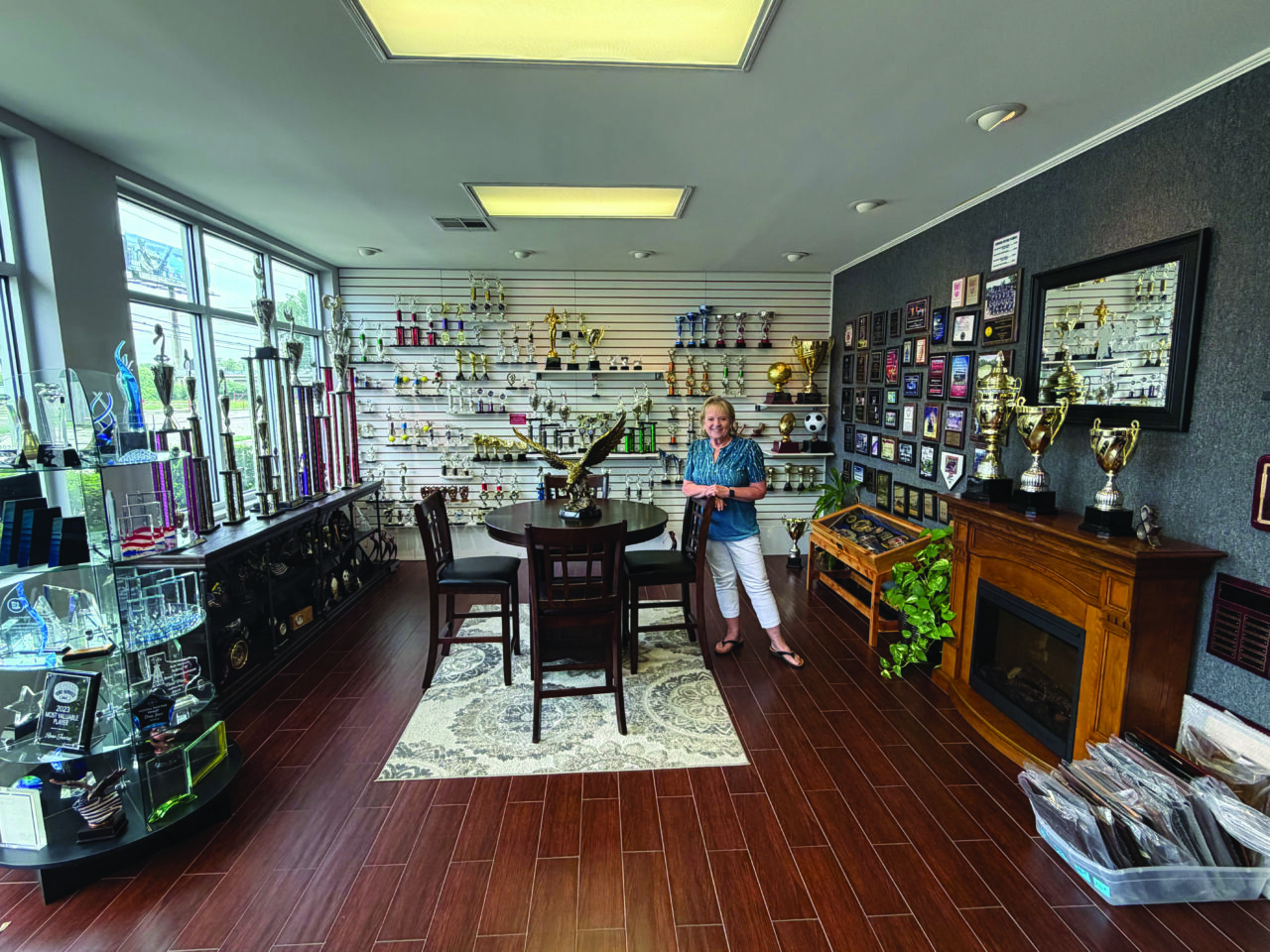
Some people are born with fire in their belly and a penchant for leadership. Pamela Deats-Connaly, owner and operator of Texas-based Custom Built Awards, embodies such characteristics. With the mind of a mentor and the spirit of a cowgirl, Deats-Connaly proves that breaking the mold, making sound investments, and focusing on genuine relationship-building pay dividends. As a result, she has been a beloved household name in the awards and personalization industry for 47 years.
“If you’re going to grow a company, you need to figure out what you do and do it well. You gotta know where your heart is and find your niche,” Deats-Connaly says. “Me: I’m not an Avon saleswoman. I’m a trophy lady.”
That sharp self-awareness kept Deats-Connaly straight and steady during trying times.
Like many young entrepreneurs, she tag-teamed a business opportunity that did not go as planned, but she handled the adversity and set the tone for the next four decades.
“One day, my high school sweetheart and former business partner asked me if I had saved any money,” Deats-Connaly recalls. She’d lent him $1,000 toward a small shop. “When I asked where my money was a while later and he said the business wasn’t working out, I was mad as a hornet. I sat down and wrote a resignation letter to my job because I was about to be in the trophy business.”
At the time, Deats-Connaly was a single mother of three children and needed to cover her family’s basic living expenses. Sales was second nature to her as a way to make a living, but starting a business was a much greater risk.
“I had to spend $50,000 I didn’t have,” she explains. “But I knew what I could sell if I got it going, and I did. You can’t operate on scared money, or you’re going to fail.”
Failure, she says, wasn’t an option.
Building a Business
What began as a small business evolved into a multimillion-dollar legacy. Today, Custom Built Awards is a 13,000-square-foot compound serving customers nationwide. The 28-person team specializes in custom-built-to-order trophies, plaques, name badges, ribbons and medallions, select signage, and gifts for businesses, schools, organizations, sports teams, churches, and special occasions.
“One thing that differentiates us is that we’re not an internet-based business,” says Deats-Connaly. “I believe you should talk to and know your clients personally.”
Deats-Connaly points to a recent 20,000-piece order thanks to that ethos.
“I’m sitting on the other line with him, chatting about church,” she adds. “I care about the person, and that matters.”
While the company focuses on volume business, Deats-Connaly says no customer request is beneath her.
“Never forget where you came from,” she says. “I remember just starting, and a person who believed in me handed me an industry contact list.”
Deats-Connaly says she contacted every person on the list. If they spoke with her, she hopped on a plane to meet them in person.
Today, Deats-Connaly still approaches every business day with the same contagious tenacity and genuine support. Not only does she take an interest in the people behind the transactions, but she also educates fellow industry professionals. She is quick to give back to the community and is proud to share a homemade meal with her work family every day.
Deats-Connaly may steer daily operations like a wise ole wrangler, but she proves magic happens when one leads with a pure heart.
Stoic Decisions = Sustainable Growth
Over the years, Deats-Connaly balanced strong intuition and a keen business sense to position Custom Built Awards for exponential growth. She’s invested in vital areas to sustain the company through predictable fluctuations and turbulent economic cycles alike.
She credits a clear value system as pivotal to the company’s long-term success. That includes standards such as superior materials, cutting-edge equipment, strategic operational expansion, devoted personnel, and loyal partners.
Deats-Connaly also remains hyperaware of personalization trends, stock market performance, and their collective impact on the industry. As a general rule of thumb, she says the trophy market is typically status quo in a good economy but “crazy” during a downturn. While families may cut back on discretionary spending, such as shopping or going out to eat, during tough times, they often overcompensate by increasing their involvement in youth activities.
“Right now, our economy is holding its own. My sales are up 15% to 20%,” she says, noting that while gas prices and tariffs are troublesome, she’s already created a buffer by building up business ahead of those changes.
She also negotiated and purchased needs in volume and used savings to buy stock.
Following Printing Trends
Deats-Connaly also closely monitors advancements in materials, techniques, and equipment. That includes Direct-to-Film (DTF) and Direct-to-Garment (DTG) printing, both of which have been windfalls for Custom Built Awards.
“The direct-to-transfer method is really innovative,” she says, and points out she’s been experimenting with substrates like acrylic with the printing technology.
An admitted equipment junkie, Deats-Connaly enjoys the challenge of finding new and exciting ways to improve business efficiencies.
“When we started engraving, one little slip-up and you had to start over,” Deats-Connaly says. “Now I manufacture my own trophies.”
You Are Your Word
While quality and service at a fair price are central to the perennial business model, Deats-Connaly emphasizes that promises made are promises kept at Custom Built Awards.
The business owner reflects on the impact her business has on customers, from company personnel receiving a lifetime achievement award, to the seven-year-old boy eagerly awaiting a hard-earned trophy at the end of the all-stars, or a customer who had a poor experience elsewhere and now needs help on a short turnaround.
“These are real people, and it’s my job to make sure the end user who receives that award feels good inside,” she says. “When someone walks in and sees their award on the table during a bid or presentation and they [audibly] suck in the air around them like a bride who enters [the reception hall] for the first time, then I did my job.”
Family First
Deats-Connaly points out that strong business practices and equipment investments would be futile without a smart, loyal staff to run the day-to-day operations.
“On my management team, the youngest has been with me for 17 years, and I have another woman who has worked with me for about 40 years,” she says, noting that part of that retention means ample compensation and valuing employee input.
Even still, Custom Built Awards has had its share of hurdles. She recalls the near-detrimental impact 2020 had on the company.
“I had just won Retailer of the Year at the APA Expo, and things were really looking up, then COVID-19 hit,” Deats-Connaly says. “I had to borrow a million dollars just to save the business. That humbles a person.”
“But I had God with me, a staff that is second to none, and clients I adore, and we made it through,” she continues.
When it came time to construct the newest building, Deats-Connaly included a large chef’s kitchen where everyone could meet, mingle, offer a blessing, and share a meal. A heart of the home at work, she says. The crew cooks meals four to five times a week and often sends guests home with leftovers.
“It’s more than what we do; it’s who we are,” she adds.
Giving Back
For Deats-Connaly, one of the greatest joys of success is sharing the fruits of her efforts. As a recognized expert in the personalization industry, the businesswoman has the privilege of mentoring small shops and leading educational sessions at the APA Expo, where she discusses setting up a showroom, choosing the right equipment and software, attracting ideal clients, and avoiding costly mistakes.
Her advice is clear and consistent: Carve a niche, be unapologetically you, and grow slowly.
“You can’t be everything to everyone. This isn’t Walmart. You can’t go and pick up your meat, drugs, panties, and tennis rackets all in one place,” she says. “Usually, we come to this realization the hard way.”
More recently, Deats-Connaly has turned down some new business due to capacity. She still specializes in volume business but only solicits one or two new clients per year. Doing so ensures fresh revenue without diminishing the quality of service. After decades at the helm, she is laser-focused on the right fit.
“I don’t cold-call anyone who doesn’t need us, but I want to work with customers who appreciate who we are and what we do,” she says.
Once perceived more as a commodity for construction and industrial woodworking, sheet goods have gradually become a staple in the personalized products industry. For retailers, focusing on areas such as application and the look of the finished product can guide their customers toward something that truly offers unique value.
“Sheet goods are no longer viewed as just a raw material,” says Matthew Arnold of TruFlat Laser Plywood. “They are becoming part of the finished-product strategy.”
“Retailers are shifting from simply producing engraved plates to positioning sheet goods as designed, high-value products,” adds Emily Vander Laan, Gemini.
Sell the Application
Suppliers say one of the biggest shifts is how sheet goods are being presented and sold.
Jackie Faeth of The Rowmark Group says suppliers are increasingly marketing sheet goods “around specific applications and technologies instead of generic materials.”
That approach simplifies conversations. Particularly when customers are less interested in substrate specs and more focused on finding the right material for signage, recognition, decor, labeling, or customized gifts.
Arnold echoes this sentiment, saying it’s more advantageous for retailers to visualize the final product for their customers.
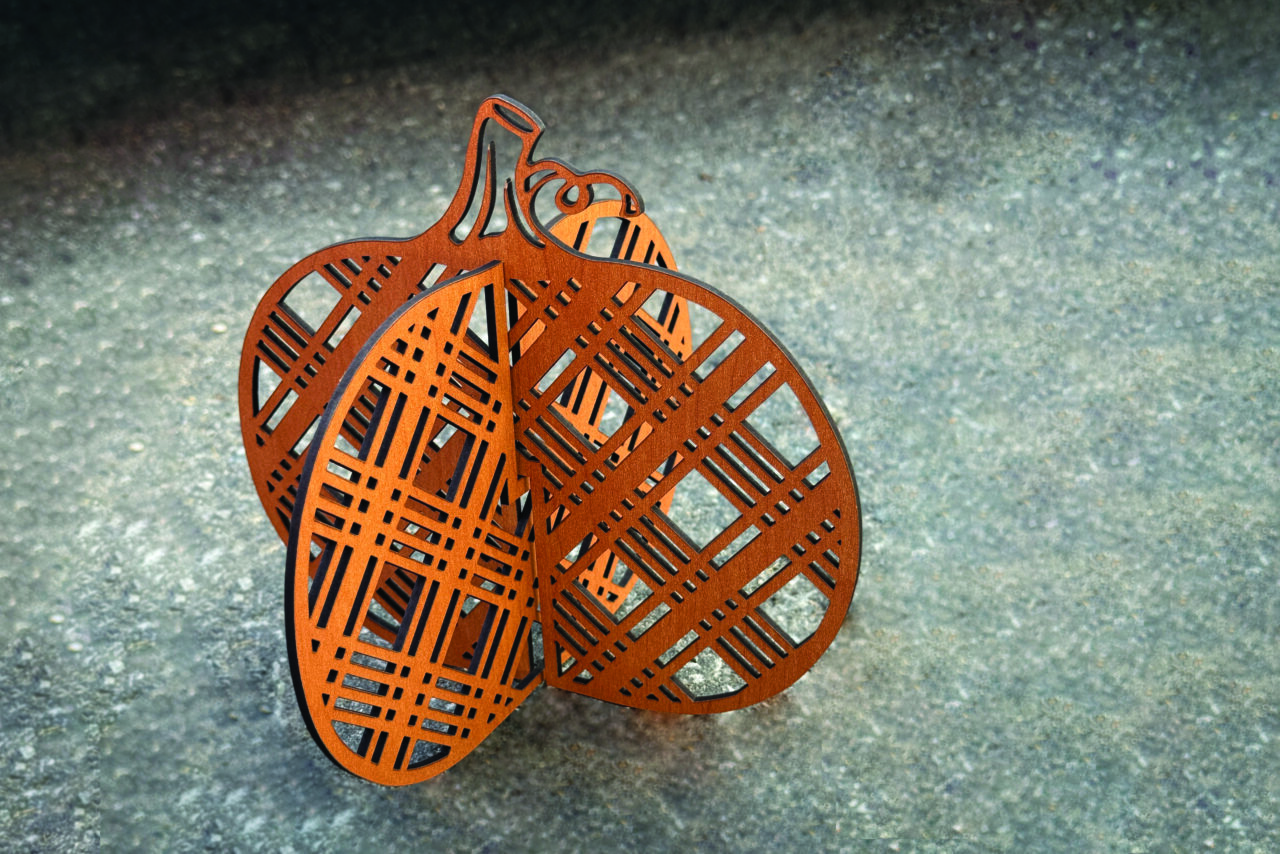
“Instead of only saying, ‘3-millimeter maple,’ we are trying to show what the material can become, such as ornaments, signs, tags, displays, packaging, decor, gifts, or branded products,” he notes. “Retailers want to understand how a sheet helps them sell the finished item, not just how thick it is.”
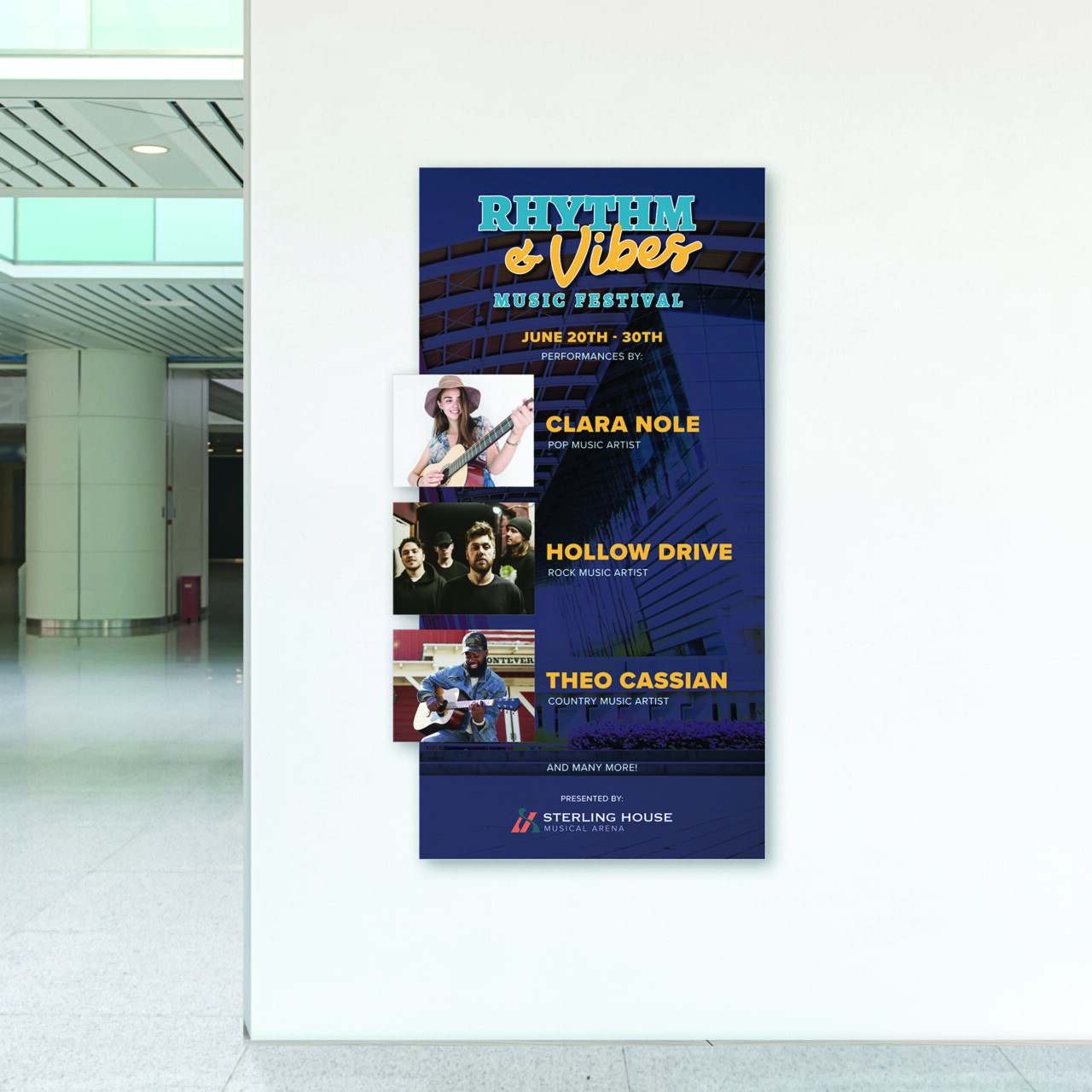
With that knowledge, retailers can pass those same application ideas on to their customers and position sheet goods as a foundation for products like memorials, graduation keepsakes, recognition awards, and even signage.
Value, Workflow, and Pricing
Suppliers emphasize that value goes beyond base price with sheet goods.
Significant components like quality, ease of use, consistent finishes, and reliable supply contribute to faster turnaround and smoother production.
Durability, versatility, and ready-to-use formats also simplify workflows and improve efficiency, according to Vander Laan.
The widespread adoption of UV printing also means that sheet goods can complement services many retailers already offer. Acrylic, wood, and glass provide flat, hard surfaces ideal for printing while enabling shops to layer techniques such as cutting and engraving with UV printing.
“These materials let makers combine cutting, engraving, UV printing, and layering in ways that are faster and more predictable than traditional finishing,” says Arnold.
Vander Laan adds that higher-end finishes and simple presentation upgrades, such as mounting or backer plates, can increase value without significantly increasing labor.
Other premium selling points include brushed finishes, vibrant colors, and textured surfaces that support stronger presentation and pricing.
There is also growing interest in higher-end materials like customizable stone. Mike Nickel of Stonelite Designs highlights how stone sheet goods can expand offerings without major investment.
“With UV printing, it’s never been easier to use better sheet stock to reach more people with another idea [like stone],” says Nickel. Thanks to sourcing options and conveniences like drop-shipping, he says retailers don’t “have to buy a whole production line to be in the marble-veneer business.”
Nickel also points to broader economic pressures shaping pricing strategies.
“I think retailers have to make a choice: Either do the same old thing you’re doing and continually watch inflation and margin compression eat away at your business as your customers change, or find another reason for them to go to your website,” he stresses.
Staying Competitive and Visible
As online sellers crowd the marketplace with budget-priced personalized goods, suppliers say differentiation is increasingly important for retailers.
Common differentiators include custom dimensions, textures, color combinations, and layered effects. Vander Laan also points to design-led products—including personalized artwork, photos, and handwriting—niche positioning, and stronger packaging and proofing experiences.
Layered designs and mixed materials remain a practical way to keep products looking fresh and less interchangeable.
Beyond aesthetics, Faeth notes increased demand for industrial tagging and labeling.
“High-quality sheet products are critical where durability, legibility, and consistency are required,” she says. “This has expanded sheet materials beyond decorative use and brought functional, long-term applications back into focus.”
That demand opens opportunities in additional markets, such as ADA and outdoor signage.
Nickel suggests testing new markets gradually to gauge demand.
“The focus is always about keeping your prototypes cheap,” he says. “Keep the cost down, put the prototype on your website, and then see if it sticks.”
Start with What You Have
While sheet goods create new revenue opportunities, suppliers stress the importance of aligning materials with existing workflows.
“You have to fit the existing manufacturing structure, and you have to make it as simple as possible for adoption,” explains Nickel. “There’s this assumption that the expertise is equal across the industry; it is not.”
Advances in UV printing and other personalization technologies make it easier for shops to experiment without significant investment. Even desktop equipment can support entry into sheet-based products.
“Personalization technologies like sublimation and laser engraving are giving retailers more ways to use sheet goods and expand what they can offer,” says Arnold.
Moving Ahead
With the online marketplace becoming increasingly crowded with low-priced personalized products, suppliers say retailers should lean into what sets them apart.
“Overall, it’s about deeper personalization, stronger design curation, and smoother customer experiences,” says Vander Laan.
Whether a retailer is selling plastic, wood, metal, or stone, the goal remains the same: Guide customers to the right solution and clearly communicate why personalized sheet goods command a higher price.