Category: Insights

  • UV Printer Manufacturer LogoJET Partners with Roland DGA to Broaden Its Direct-to-Object Lineup

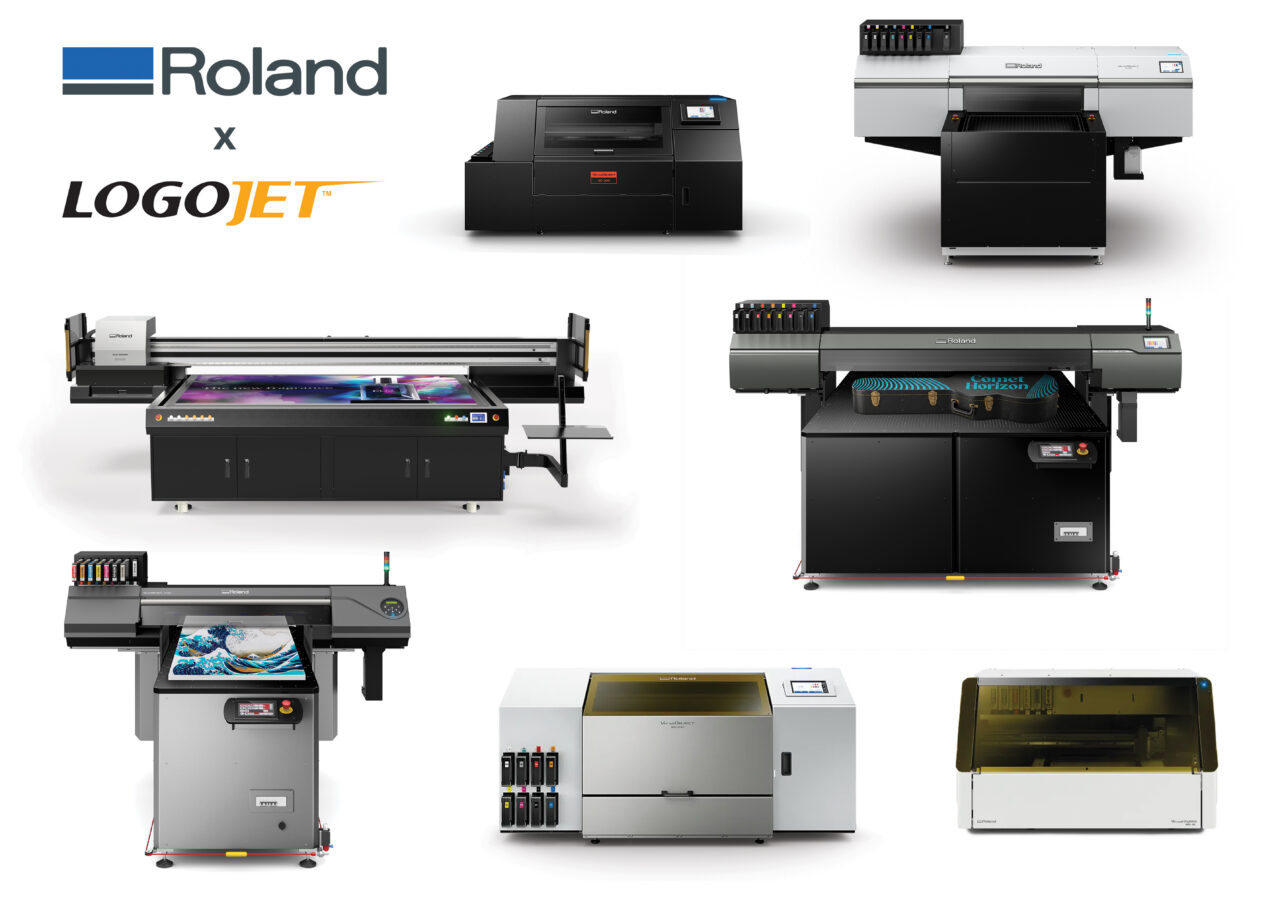
    Through a new partnership with Roland DGA, LogoJET adds VersaStudio, VersaObject, and EU2-1000MF UV flatbed printers to its portfolio — pairing them with the five-star support, product-decoration knowledge, direct-to-object expertise, and complete solutions the company is known for.

    LAFAYETTE, La. — September 21, 2026 — LogoJET, a leading manufacturer of direct-to-object UV printing solutions, today announced a strategic partnership with Roland DGA to bring Roland DG VersaStudio and VersaObject UV flatbed printers and RC-300 Series cylindrical printers to its customers. Adding these products to its current offerings enables LogoJET to provide a wider range of machine sizes and features, while also ensuring that the company is fully equipped to sell, install, and support these products from day one.

    The partnership broadens LogoJET’s line in both directions: from smaller, desktop-friendly models built for entry-level and price-sensitive applications, to larger-format solutions that reach beyond the company’s current award-winning R-Series UVx40R PLUS-SE and UVx90R-SE direct-to-substrate printers. Through this partnership, LogoJET can now meet a wider range of customer needs without sending anyone elsewhere.

    For LogoJET, the fit goes beyond the products. As more companies bring customization in-house, they need a partner who provides the training, support, custom trays, and software expertise required for long-term success. Helping customers build efficient, repeatable production workflows has always been at the heart of LogoJET’s approach. Paired with Roland DG’s trusted products, it gives customers a more complete experience than ever.

    Just as important, the two companies share closely aligned values and a “customers for life” approach. Roland DGA’s philosophy of being “the best rather than the biggest,” as well as its purpose of empowering creativity, mirror LogoJET’s own values of putting customers first, finding solutions, and helping businesses turn their imagination into finished products. Both companies believe growth comes from serving customers exceptionally well rather than simply chasing size, and both have earned deep, lasting loyalty the same way, through service that stays with the customer long after the sale. This shared foundation allows LogoJET to continue developing manufacturing and industrial solutions while incorporating select Roland DG products into its portfolio, giving customers a single, trusted partner as their production needs evolve and scale.

    “Partnering with Roland DGA was a deliberate, strategic choice,” said Susan Cox, Founder and CEO of LogoJET. “We explored building new solutions ourselves and working with other manufacturing partners, and Roland DGA was the right choice and the faster path to market. Beyond great products, we saw a company whose values mirror our own. This relationship lets us say yes to more of what our customers ask for. By adding Roland DG printers to our own lineup, LogoJET can now serve a broader segment of the UV direct-to-object market, offering our customers a solution to fit any price point, bed size, or production need, from entry-level desktop models to larger-format production systems, while backing every device with the training, support, custom trays, and expertise LogoJET is known for. Together, we are giving businesses more ways to grow, expand into customization, and turn new opportunities into reality.”

    “Roland DGA is committed to growth within industrial printing markets as direct-to-object manufacturing continues to expand at a rapid pace,” said Roland DGA’s Vice President of Business Development, Dan Johansen. “LogoJET has been a pioneer in providing solutions to the market, and this strategic partnership creates tremendous opportunity for us to rapidly expand our mutual businesses to meet and exceed the growing needs of our customers.”
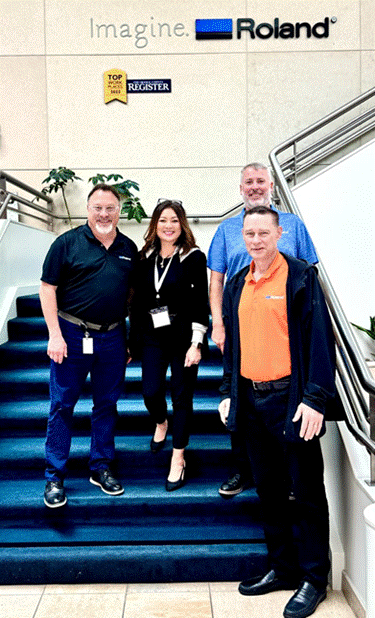
    Pictured at Roland DGA headquarters (from left): Dan Johansen, Vice President of Business Development, Roland DGA; Susan Cox, Founder & CEO, LogoJET; Sid Lambert, Director of Sales, Roland DGA (rear); and Dan Burmeister, CEO/President, Roland DGA (front right). Photo courtesy of LogoJET.

    Download high-resolution image: click here

    LogoJET will debut its Roland DG product lineup at the PRINTING United Expo in Las Vegas, September 23–25, 2026, where it will showcase the VersaStudio BD-12 desktop UV flatbed printer and the new VersaObject RC-300 cylindrical UV printer paired with LogoJET’s own printer line, including the R Series UVx40R PLUS-SE and latest Inspira Series UVx90i, in booth #C2691. To learn more, visit logojet.com or contact a LogoJET representative.

    About LogoJET

    Founded in 2005 and headquartered in Lafayette, Louisiana, LogoJET is a U.S.-based leader in direct-to-object UV printing solutions. An early pioneer in industrial UV printing, LogoJET designs and manufactures its own award-winning printing systems and, through its strategic partnership with Roland DGA, offers select Roland DG technologies to provide customers with solutions ranging from entry-level desktop customization to large-format production.

    More than an equipment provider, LogoJET delivers complete production solutions backed by decades of direct-to-object expertise, including application testing, custom trays and fixtures, workflow software, installation, operator training, and responsive five-star technical support. This combination of technology, expertise, and support helps businesses bring customization in-house, expand their capabilities, operate efficiently, and scale with confidence.

    Learn more at LogoJET.com.

    About Roland DG Americas

    Roland DGA serves North and South America as the marketing, sales, distribution, and service arm of Roland DG Corporation. Founded in 1981, Roland DG of Hamamatsu, Japan empowers creators and businesses worldwide to “Make Your Mark” using innovative digital imaging solutions that turn ideas into positive impact. Combining hardware, software, services and supplies, Roland DG is a global leader in wide-format format inkjet printers for sign, textile, industrial, interior design, personalization, and vehicle graphics markets; engravers for awards, giftware and signage; photo impact printers for direct part marking; and milling machines for dental CAD/CAM, parts manufacturing and medical industries. Uniquely designed for high-mix, on-demand production, Roland DG solutions enable print professionals, manufacturers, and entrepreneurs in a variety of industries to elevate their level of craftsmanship, productivity, and profitability.

    Media Contact

    Michele Choate, VP Marketing, LogoJET

    337.330.8471  —  [email protected]

    # # #

  • Anchoring a Military Niche: Basement Woodworks illustrates veteran Sean Arnold’s personalized woodwork honoring those who have served

    While serving the latter part of his 24 years in the United States Navy, CPO Sean Arnold tinkered with woodworking in his Brunswick, Maine, basement. For all intents and purposes, this was a hobby, never intended to be anything more.

    Then the officers and sailors began calling. 

    “The guys realized that I had some woodworking experience, and not only that, I had tools,” he says. “One of the guys would ask, ‘Hey, chief, can you make a shadow box for so-and-so’s retirement?’”

    The one-offs for service members kept coming and continued for the last couple of years of his career. 

    “If you’d have told me 20 years ago that I was going to be doing this for a living, I would’ve told you were out of your mind,” Arnold laughs.

    Chief Arnold retired from the navy in 2006 as a Navy chief petty officer and launched Basement Woodworks from his home, specializing in custom military shadow boxes and flag cases he could sell online. At the time, he and his wife were also raising three boys, and the opportunity to run a business and be a stay-at-home dad was not lost on him. 

    Continuing the business as a family affair. Arnold’s father also retired, sold his home in Maryland, and moved to Maine to help.  

    They eventually expanded from the basement into a 40-by-60-foot building, and not long after that, the local trophy shop, which made brass plates for Arnold’s boxes, was looking for a new owner.

    “I raised my hand, and the bank was dumb enough to give me the money, so I bought it,” he says. “I was in debt up to my ears, but I was loving it.”

    Acquiring Accolades Awards & Trophy allowed Arnold to combine his tools with a couple of engravers and some sublimation equipment. The basement was more in the rearview mirror as he moved the entire operation to Fort Andross, a historic mill in downtown Brunswick incubating small businesses.

    In the 10 years at the mill, Arnold continued to grow his equipment, adding another Epilog C0₂ laser engraver, another diamond drag engraver, a small-scale Shopbot CNC machine for the wood carvings, and a 5-foot-by 12-foot ShopbotCNC machine, which was in storage because, once again, Arnold had outgrown his space. Today Basement Woodworks operates out of a 3,400-square-foot shop on its own property.

    “I’ve got a full woodshop in the back. We’ve got an engraving room, we expanded into embroidery, and we started doing direct-to-film processing,” he says. “We kind of live by the motto, ‘If it can be personalized, we can do it.’”

    One such order would require much of Arnold’s equipment and attention: the personal effects of Lieutenant Michael Murphy, a Navy SEAL who was killed in action while serving in Afghanistan.  

    “The boys came in with his personal effects, and I had to make a cabinet that was actually going to be bolted into the destroyer [the USS Michael Murphy (DDG-112)] on their Wall of Heroes,” says Arnold. The display was a gift from the state of New York honoring Murphy in his namesake destroyer built by Bath Iron Works, a Maine shipyard founded in 1884 and known for building many military vessels.

    Honoring fallen soldiers has become part of the job, and one Arnold takes great pride in.

    “I’ve had some very memorable boxes that I’ve had to do here,” he says. “Some of them would make your hair stand on the back of your neck when you get them done.”

    While Arnold’s specialty resides with military memorials, his investment in APA and its network has proved valuable to his business. Like many, Arnold has made important connections at the Expo—like his reps from Marco Awards Group. He can also be found on the M2M forum, and dog-ears the educational CorelDRAW stories from Insights magazine.

    “Erich Stock comes up here all the time. He comes to the shop, and he’s just gobsmacked when he comes in here. He loves the shop,” says Arnold. “That’s probably one of the most meaningful connections I’ve made through the APA.”

    Today Arnold gets to settle in and work with two of his sons. Nicholas helps with woodworking, while Alex, a college junior studying graphic design, handles design, T-shirts, and engraving. Arnold has far exceeded his expectations for his business and continues to see growth, and yet you can take the man out of the military, but you can’t take the military out of the man.

    Out front of Arnold’s shop is a sign that reads, “Genuine Chiefs welcome! CPO Selectees must sing Anchors Away then request permission to enter!” 

    In August, the selectees come from their ship at Bath Ship Yard as part of their initiation, and they visit Arnold and serenade him.

    “It is really quite a thing,” says Arnold of the impromptu ceremony. “Any veteran that is transitioning [to civilian life], quickly finds out that it is probably the hardest thing they’ll ever do. I maintain that military connection, and I’ve never had to lose it. Which has been wonderful.” 

  • Reimagining a Classic Technique: 4 Ways Decorators Can Use UV Printing to Elevate the Corporate Gift Experience

    While UV printing officially debuted in the early 1970s as a viable industrial method for printing barcodes and packaging labels, the technology didn’t reach elevated commercial wide-format and promotional-printing capabilities until decades later.

    “Early UV systems were often cost prohibitive and geared toward high-volume production environments, whereas today’s equipment offers improved reliability, expanded material compatibility, and a lower barrier to entry,” says Jackie Faeth, marketing coordinator at The Rowmark Group.

    As companies reimagine and redefine the act of corporate gift giving, the graphics and promotional products industry is called to raise the bar in choice, quality, and convenience. 

    Variety Is the Spice of Life

    Modern UV printing, also referred to as direct-to-object (DTO) printing, utilizes UV light to cure ink on various substrates. The result is a durable, vibrant full-color finish that is dry to the touch, making it a popular choice for a wide variety of substrates in signage, packaging, labeling, and industrial printing.

    According to Faeth, versatility is one of the technology’s greatest strengths. From acrylic, metal, and wood to glass, faux leather, and plastics, UV printing allows shop owners to instantly customize, print, and cure on most hard and flexible surfaces. Furthermore, the technology excels at special effects like spot gloss, tactile raised textures, and layered artwork, which are difficult to achieve with many traditional decoration methods. 

    In addition to producing branded office decor, ADA-compliant products, and full-color industrial signage, UV printing helps diversify a shop’s corporate catalog. The technology’s versatility can be used to customize a variety of personalized products, from employee-recognition and client relationship-building and retention efforts to service or event promotion. 

    The cured ink forms a scratch-proof and fade-resistant barrier that helps meet the need for long-lasting products. Retailers can create everything from high-end apparel and company-branded electronics to premium glassware and tumblers as well as executive nameplates, desktop accessories, and awards and plaques that will endure longer than some other ink-based printing methods. 

    Top-quality leather patches are another example. Emblems are often associated with laser engraving but can also be produced with UV printing. Rather than a laser engraver removing material to create depth, a UV printer can build up layers of clear varnish to create raised lettering or simulated textures like wood grain and leather stitching. 

    Looking ahead, Faeth says decorative acrylic products, layered signage, textured awards, and specialty gift items featuring tactile effects are expected to gain in popularity. 

    Outstanding versatility in materials, surfaces, and effects presents corporate clients with a bevy of premium gift-giving options that can be produced quickly and efficiently, proving profitable for business owners yet still cost-effective for clients. As a result, corporate customers can create highly detailed and tactile branded merchandise without compromising their brand identities or tight marketing deadlines. 

    Combining Forces to Maximize Capabilities 

    While UV printing is a powerful stand-alone technology, it can also be used in mixed-media techniques to create standout products for corporate clients. 

    Faeth points to methods like combining engraving with UV color fills or laser-cut acrylic with UV for premium products. 

    Lon Riley, founder and CEO at DPI Laboratory, also notes that the digital nature of UV printing means less tooling and setup than traditional decoration methods. 

    As such, shop owners can expand into new markets and kick-start multiple revenue streams while streamlining operations. That opportunity also reduces inventory overhead and minimizes outsourcing, while enhancing the customer experience from the very first touchpoint and producing an abundance of high-margin custom goods at lightning speed.

    Meanwhile, customers reap the benefits of choice, impeccable detail, and exceptional print quality at a competitive price point. 

    “Corporate clients are all about show me what you can do,” says Riley. “With the right UV setup, business owners gain a competitive advantage in demo, sample, and final production. The technology offers nice color control, which is important for corporate clients with logos and brand identities to consider.”

    Plus, if retailers can produce small quantities economically, their corporate clients may be more open to more highly customized products previously considered unaffordable, Faeth suggests.

    As the equipment becomes more accessible, Faeth and Riley agree shops of all sizes have been able to implement UV-printing capabilities. Today, systems ranging from desktop models to production-focused printers are making UV printing more attainable than ever. They encourage decorators to start with a focused product offering, develop a strong sample portfolio, and expand as demand grows.

    Solve a Problem, Tell a Story

    Breathing life and meaning into a brand is where the magic happens. While selling a physical product is transactional, solving a customer’s problem is transformational. Riley notes common issues like low employee morale, poor customer retention, and low brand loyalty as opportunities for retailers to open the door with high-quality UV-printed products. 

    Riley encourages retailers to lean into the technology’s vast capabilities to present real solutions that simultaneously wow customers with exclusive options. Textures, varnish effects, and distinctive product choices help tell a story and create value, he adds. 

    “If you can provide detailed samples to prospective clients, which is easy and cost-effective to do with UV printing, then creative ideas and possibilities are sure to flow—increasing chances of landing the client,” he says, suggesting decorators add their own branding to the samples as well, especially with leave-behinds. 

    One-Stop Shop

    As corporate buyers steer clear of generic low-quality promotional products, experts suggest positioning your business as a leader in comprehensive branded-gifting programs with personalization, presentation, packaging, and speed built into the experience. 

    Growth is in “the coordinated experience” that corporate clients increasingly expect when they spend $50, $100, or $200 per recipient on a sales kickoff, a client appreciation initiative, or an executive welcome package, according to Michele Choate, vice president of marketing at LogoJET.

    She says traditional packaging suppliers often avoid the work because quantities are too small and personalization is too complex. Retailers without UV DTO capability can produce the products but not the full coordinated program. Meanwhile, many brand-side marketing teams want to bring gifting in-house but lack the production equipment, sourcing relationships, and workflow expertise the promotional products industry has spent decades building. 

    “This leaves a massive opening for the supplier who can deliver the entire solution,” she says, noting the companies slated to win are the ones investing in UV direct-to-object production supported by scalable tray ecosystems and reliable blank-media sourcing for boxes, tins, inserts, and presentation packaging.

    Sophisticated UV technology is the answer, shifting a company from a product decorator into a production partner capable of delivering scalable branded experiences on demand.

    “For promotional products companies, that means [crafting] the entire deliverable—the items, the boxes, the inserts, the hangtags, and the nameplates can all be produced in-house, on one piece of equipment, in a coordinated run,” Choate says. 

    Choate adds that organizations that invest in that full set of solutions will help define the next phase of corporate gifting and promotional products. 

    While it can be a daunting challenge to consider, sources agree that retailers should consider owning the entire gifting workflow if they want to stay competitive and offer buyers enticing solutions. 

  • Meaningful Gifting: Products that Create an Experience and Reflect Company Culture are Increasingly in Demand

    As workplaces evolve amid fast-paced changes in technology like AI, economic pressures, workforce restructuring, and more, recognizing employees for their achievements has become more crucial than ever. 

    That’s because recognition reinforces employee engagement, motivation, morale, personal value, and ultimately, the bottom line and entire culture of organizations, big and small. Research has shown that turnover drops by at least 7% for employees who feel they are properly recognized for their work, and new hires receiving recognition are five times less likely to leave within the first year, to name just a few benefits. Suppliers are heeding the call with increasingly specific, authentic, and personalized awards. 

    “Today’s recognition programs are less about the award itself and more about the experience it creates. The most successful recognition pieces reflect a company’s culture and values while giving employees something they’ll be proud to display for years,” says Karen Guzman, associate business development manager at Gemini.

    Just like the workplace, corporate and employee recognition products are ever evolving to meet customer needs, aided by technology advancements and a focus on efficient, quality processes. Here’s what suppliers are seeing with industry trends in the corporate-recognition arena and how retailers can capitalize on them. 

    Trends in Creating Meaningful Recognition 

    Along with the increase in demand has been a shift to more unique products. 

    “We’re seeing a strong shift toward visible, environmental recognition—pieces that live within the workplace and become part of the culture,” says Samuel Liberto, vice president of sales, architectural products, at Matthews Architectural Products. 

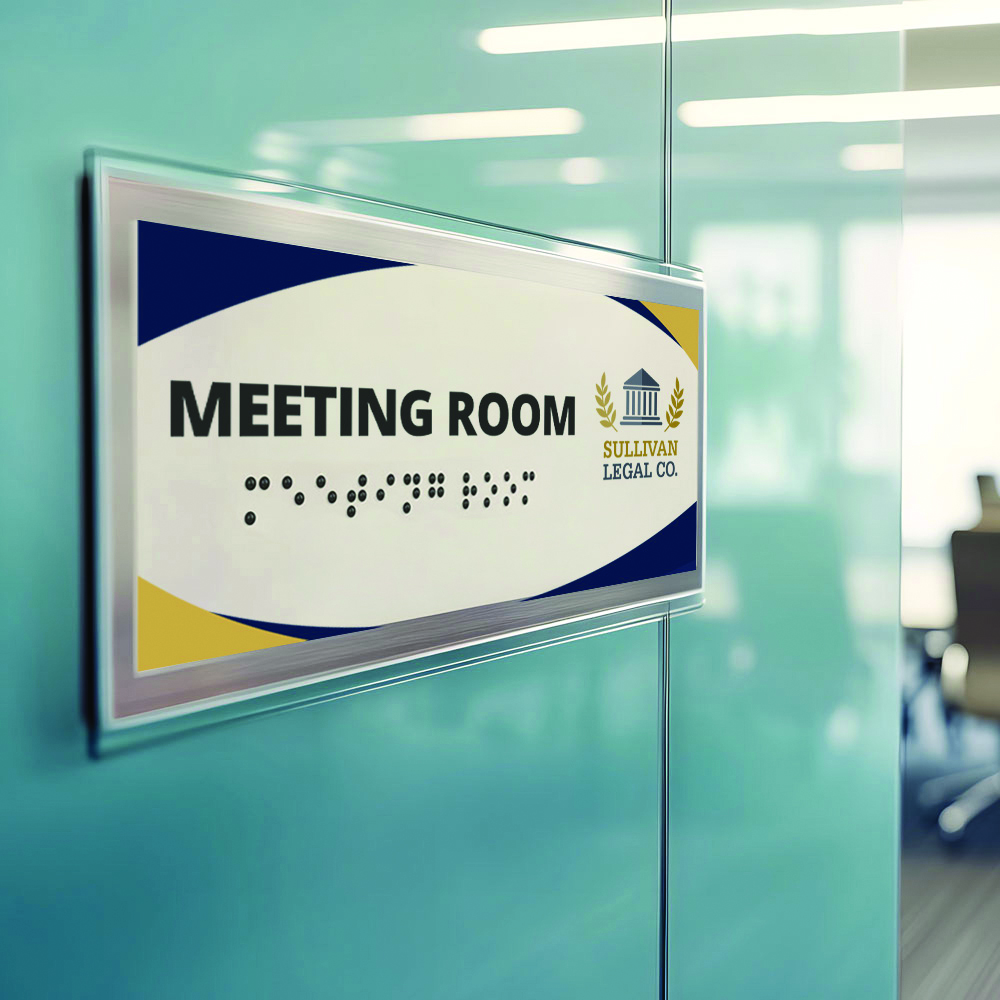
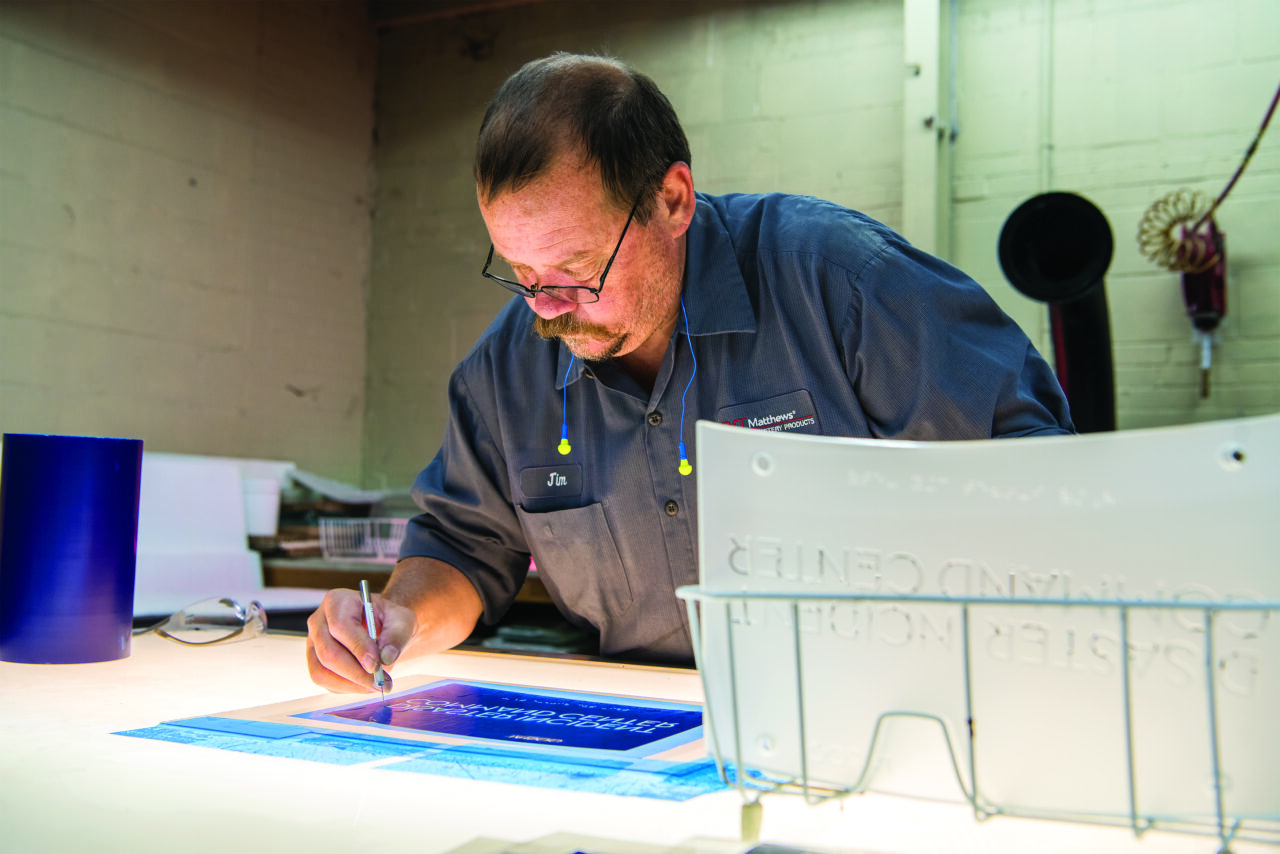
    According to Liberto, there is a continued shift from traditional recognition to legacy recognition. Matthews frequently creates architectural recognition elements like plaques, door-style installations, and dimensional displays that become permanent fixtures in offices and other workplaces. 

    In addition, there is increasing demand for impactful pieces that turn personal stories into physical objects, such as turning a photograph into a bronze bas-relief. 

    “That allows organizations to recognize individuals not just by name but by capturing a moment, a contribution, or a legacy in a highly tangible, lasting, and visible way,” Liberto notes.  

    Guzman also suggests a shift in the types of milestones being honored, opening up more avenues for products to reinforce company values and culture while acknowledging employee contributions. 

    “Companies are incorporating recognition throughout the year for things like safety milestones, wellness initiatives, volunteer efforts, and peer-to-peer recognition programs,” she says. “These types of recognition programs generally trend more toward branded, personalized gift items such as coolers, water bottles, apparel, and so on.”

    Capitalizing on Corporate Recognition

    How can retailers take advantage of the current corporate awards space to meet client needs? The answer seems to resound: Assess the customer’s goals with outcomes in mind. 

    Guzman shares a few questions retailers should ponder as they’re pitching new products to corporate customers: Are they trying to improve employee engagement? What about celebrating milestones? Do they need new ways to recognize top performers? 

    “It’s also helpful to present recognition as an ongoing program rather than a one-time purchase,” says Guzman. 

    This puts the focus on outcomes and results rather than simply making a sale. 

    “Retailers should position recognition as a tool for reinforcing culture and values, a way to build employee connection and pride, and an opportunity to create a physical legacy,” says Liberto. “It is also important to engage multiple stakeholders because recognition today sits at an intersection of culture, brand, and physical space.”

    Create a Showcase

    Showcasing coordinated award collections, offering multiple price points, and providing customization options with company branding helps customers envision a complete recognition program instead of just selecting an individual award, according to Guzman. 

    Liberto suggests showcases be experiential and story driven. Mock walls or installations, including material samples and design kits, offer a valuable way to demonstrate the progression from concept to finished product. 

    For online experiences, organizing content by application, focusing on storytelling rather than product listings only, and including before-and-after visuals are best practices to help customers envision results. 

    Bottom Line

    Sources agree that corporate recognition will continue to evolve alongside workplace trends. With that fluidity, it’s important to stay on top of trends to help corporate customers meet their needs. The storytelling trend is one that has been gaining momentum and will continue to build. 

    “We see recognition evolving beyond individual awards into spaces and experiences that tell a story. The ability to transform something as simple as a photograph into a lasting bronze artifact represents a powerful shift—one that connects people, place, and purpose in a very tangible way. Recognition, at its best, doesn’t just acknowledge achievement—it preserves it,” says Liberto.

    In addition, customers are demanding higher-quality and higher-design options. The awards and recognition industry is well poised to meet these needs thanks to emerging technology that offers efficient production while retaining quality.

  • Positioned as a Partner: How JDS Industries continues to focus on the customer as a part of growth

    With a storied history that traces back to the 1970s, JDS Industries has grown by expanding its warehouse locations and product selection to become one of the personalization industry’s foremost suppliers.

    “Businesses in our industry are being asked to do more than ever,” says Kyle Alexander, marketing director at JDS Industries. “They’re serving more markets, offering more decoration methods, and turning orders around faster while managing inventory and costs.”

    The company, he says, has continued to expand its offerings while staying true to the lineup that helped it establish its name. 

    Whether it’s awards, drinkware, apparel decoration, signage, or personalized gifts, the goal is to “give retailers more ways to serve their customers through one trusted partner,” Alexander adds. 

    With a massive network of 13 warehouses, including its main location in Sioux Falls, South Dakota, JDS has expanded its footprint on both coasts, plus several locations in the Midwest and Southwest. 

    Choosing New Products 

    Currently, JDS’s offering sits at more than 25,000 products, with more incoming. With that massive an inventory, Alexander says it’s important for the company to choose products that best serve retailers rather than just fill the cache. 

    “We focus on making investments that help our customers grow, serve more markets, and stay competitive,” he adds. “If we can make their businesses a little easier or create new growth opportunities, that’s where we want to invest.” 

    In recent years, that’s meant expanding the scope of retailer supplies from promotional products to decorated apparel tools like direct-to-film (DTF) supplies and blanks like hats and canvas bags. Alexander points to changes at the retail level that are directly affecting product growth and expansion. 

    “What’s been most interesting is how our customers are evolving,” he says. “Businesses are looking for partners that can support a broader range of products and decoration methods.”  

    Rather than staying within a single category, many retailers, he says, are expanding into complementary products that fit naturally with what they already offer. 

    “It’s less about replacing their core business and more about creating additional opportunities for the customers they already serve,” Alexander notes. 

    Creating Opportunities with Existing Resources

    Outside of decorated apparel and accessories, another focus area for JDS Industries’ products has been an expansion of UV-printable goods, engravable products, and customizable tumblers. That’s because retailers who work with JDS already have the equipment to personalize these goods, so it’s just a matter of upselling to their end customers and refining techniques they’re already familiar with. 

    “Products like Laserable Leatherette, Polar Camel, and UV-printable materials allow shops to expand into new markets without completely changing how they operate,” says Alexander. “Whether it’s corporate recognition, home decor, or promotional products, these product lines create additional opportunities to increase average order value while serving a broader range of markets.” 

    Alexander says there are also other opportunities for retailers who have the capacity to make moderate investments, especially with technologies like DTF printing. 

    “It gives businesses a relatively low-cost way to expand into products like hats, patches, and apparel without making a significant equipment investment,” he adds. 

    Positioned as a Partner

    With the wide breadth of wholesale suppliers in the personalization industry, JDS leans on its product knowledge as a large part of what sets the company apart from other big players. 

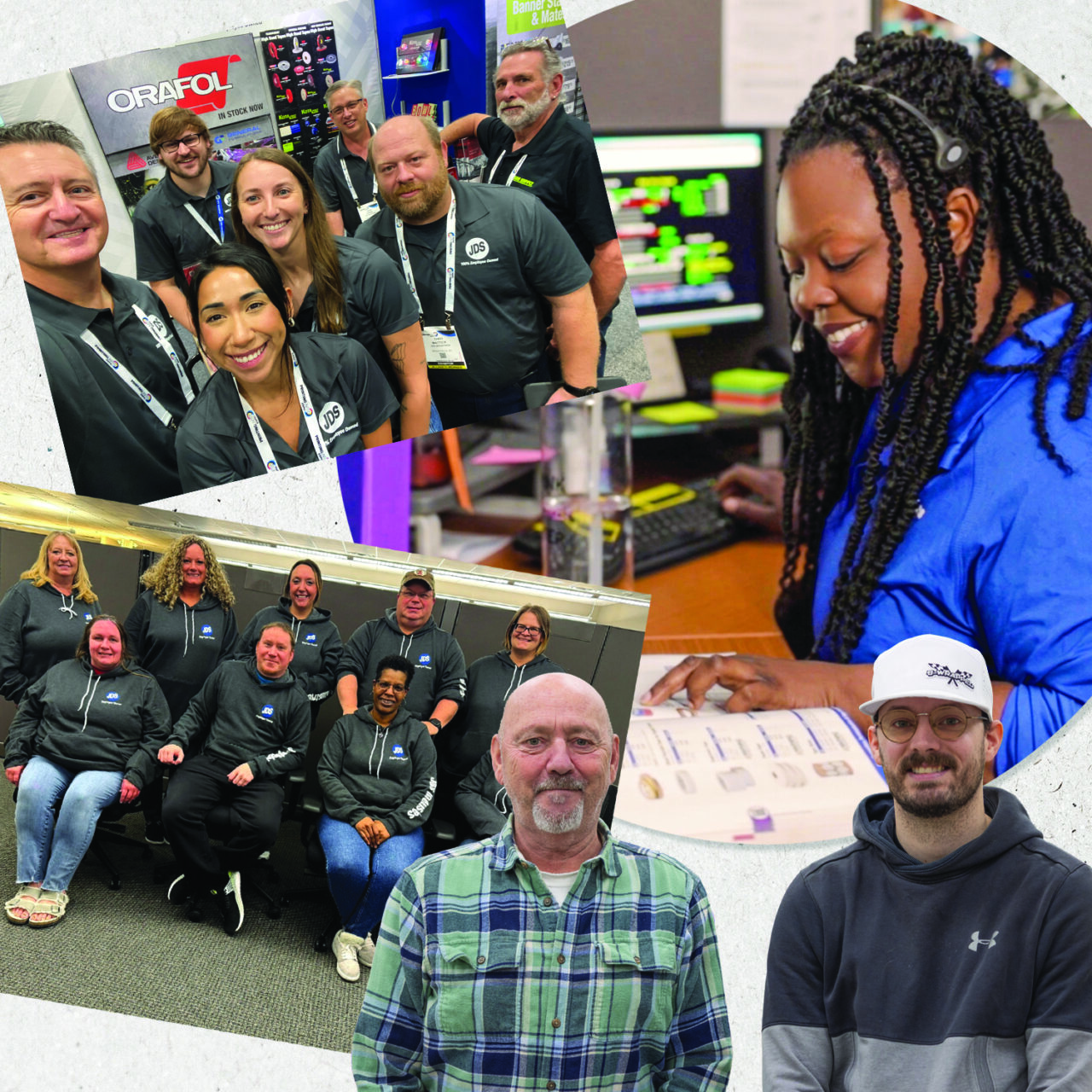
    Alexander says JDS employees take pride in being product experts, which is likely reinforced by the company’s overall culture and structure. In early 2025, JDS announced that it was 100% employee-owned through an employee stock ownership plan (ESOP). 

    With that engaged workforce, Alexander says one of the biggest focuses right now is helping retailers take the often nerve-racking step of investing in new markets or equipment, rather than upselling them without good cause. 

    “Our goal is to make that transition as easy as possible,” he adds. “That starts with knowledgeable people who understand the products, inventory businesses can count on, and educational and marketing resources that help shops get started with confidence. As an employee-owned company, every one of us has a vested interest in helping our customers succeed, and we believe that mindset comes through in the way we serve them every day.” 

    Into the Future

    Alexander says JDS sees a continued demand for premium goods that “combine functionality with customization.” Those premium products include UV- and DTF-printed goods, which also help meet demand for shorter turnarounds and durability. 

    “As customer needs evolve, we’ll continue investing in the products, inventory, technology, and support that help businesses stay competitive,” Alexander adds. “What won’t change is our commitment to helping our customers grow.” 

    By continuing to listen, adapt, and invest in the areas that matter most, JDS will remain a trusted partner for years to come, he notes. 

  • CorelDRAW Tips for Sublimation: How to achieve professional printing results and save time 

    Achieving vibrant, accurate sublimation prints relies heavily on how you prepare your design workspace. CorelDRAW is a powerful tool for this process, but the default settings are not fully optimized for sublimation when installed. 

    Minor adjustments to your layout habits, color settings, and workflow make a significant difference between a dull print and a crisp, professional product. 

    This guide outlines shortcuts, color management, and smart printing workarounds to maximize your efficiency and output quality in CorelDRAW. 

    Shortcut Keys 

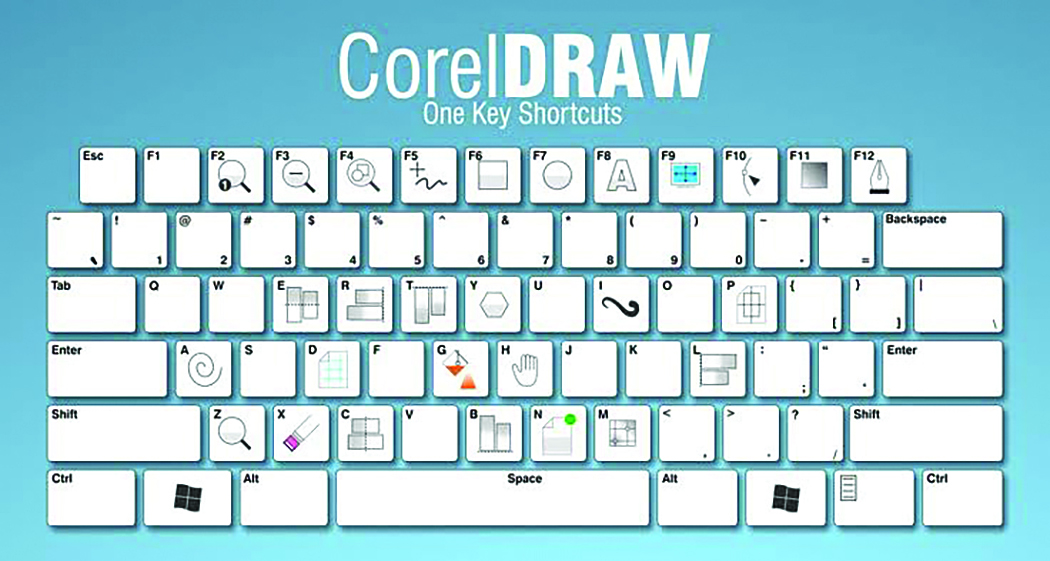
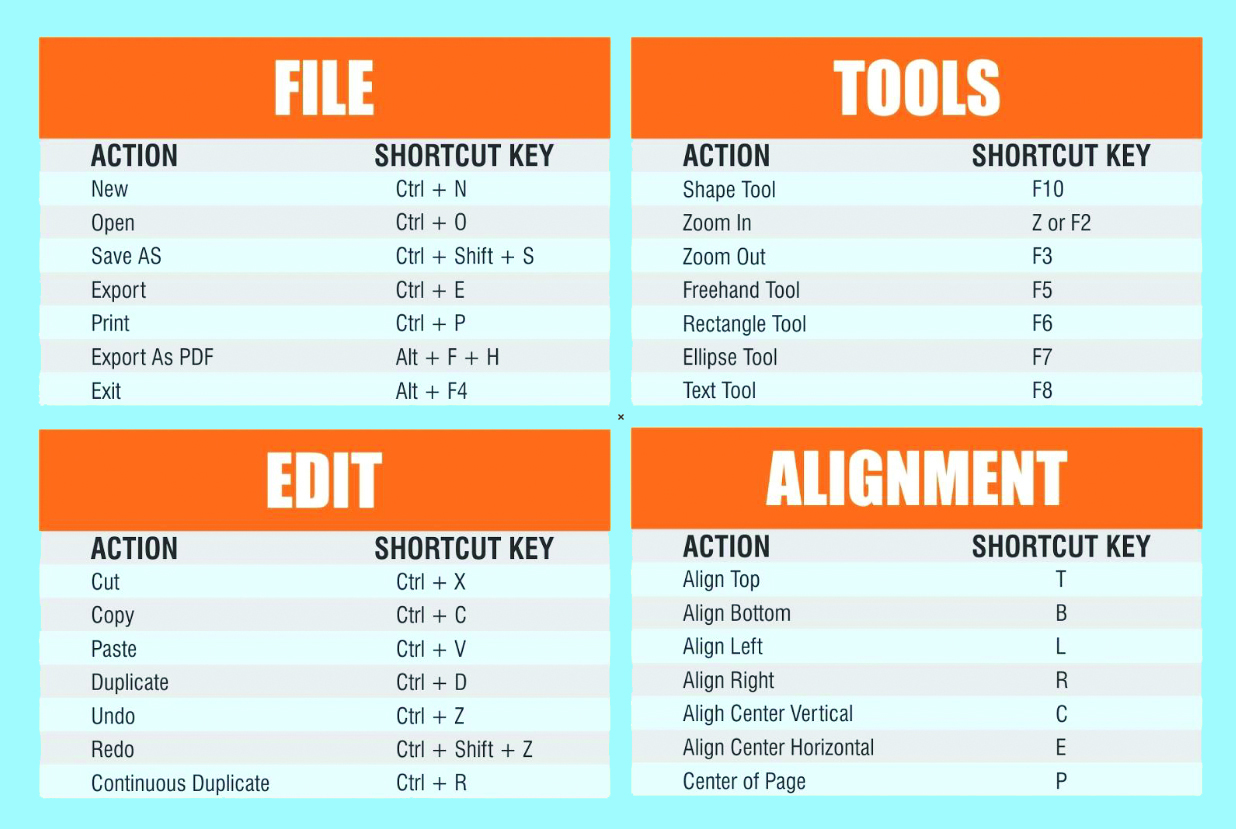
    Time Saved per Action: Studies have shown that selecting a tool on a sidebar menu or drop-down takes anywhere from two to five seconds. Using a hotkey can bring that time down to less than a second. This may not seem like much time, but overall, it could save you about 50 hours a year for average computer users. Familiarize yourself with some of the hotkeys shown in figures A and B to save you time during your daily routines.

    Essential Color Management 

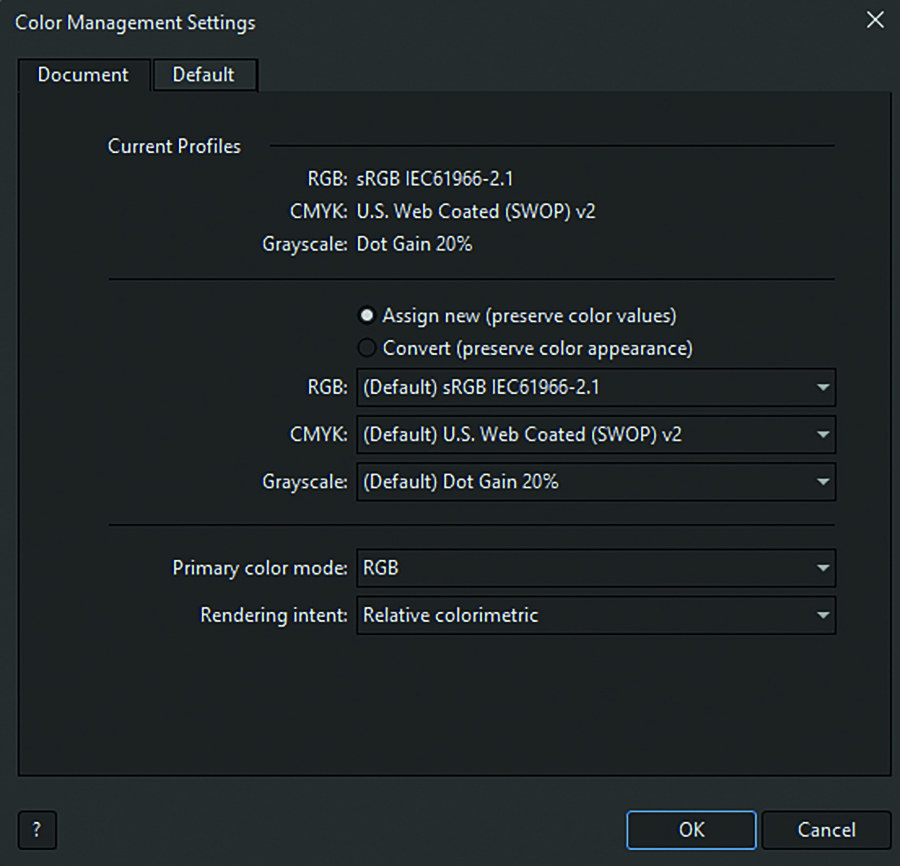
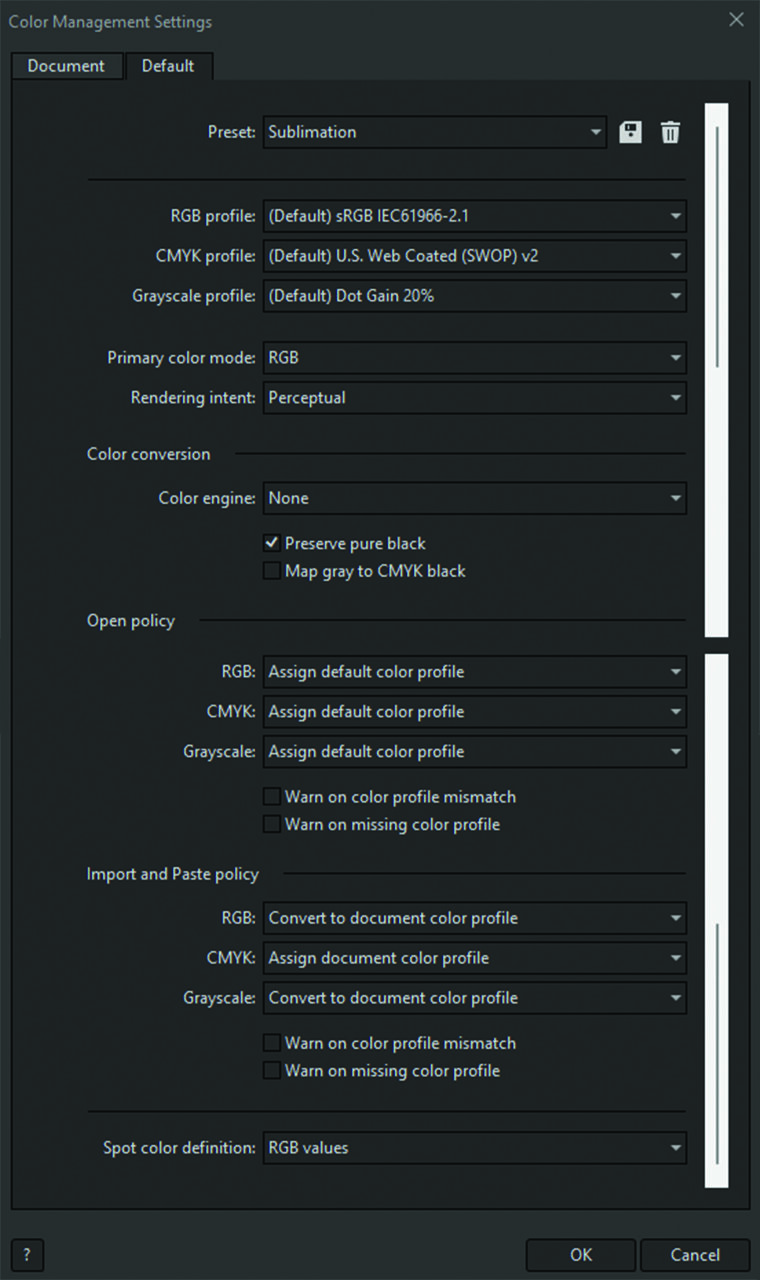
    • RGB Workspace: CorelDRAW defaults to CMYK, but sublimation inks and standard printers process colors best in RGB. 

    Ensuring your program’s color management and documents are set to RGB will yield vibrant color output. 

    To change these settings, go to Tools > Color Management (figures C and D). 

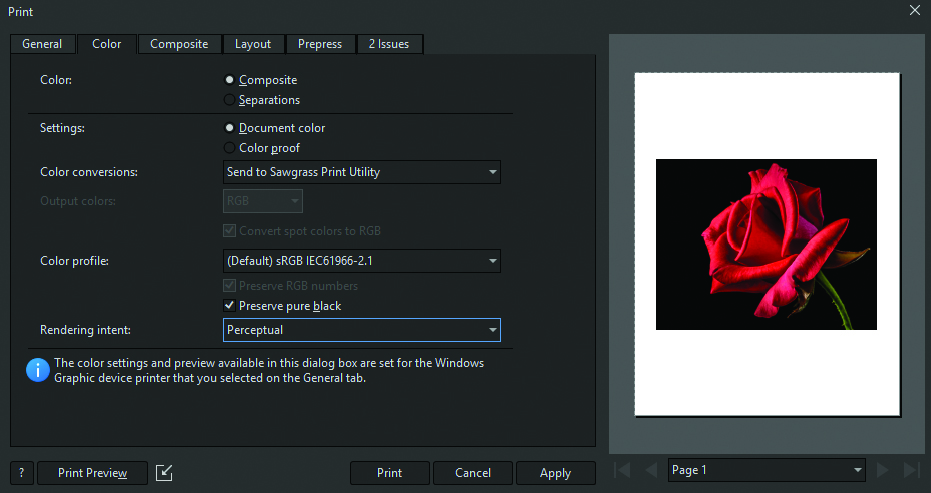
    • ICC profiles: ICC profiles are key to a constant, correct color output. ICC profiles typically come from the printer manufacturer or ink supplier (e.g., the Sawgrass Print Utility program or Epson Edge Print PRO).

    Change settings in File > Print > Color tab (figure E). 

    Smart Printing Work-Arounds 

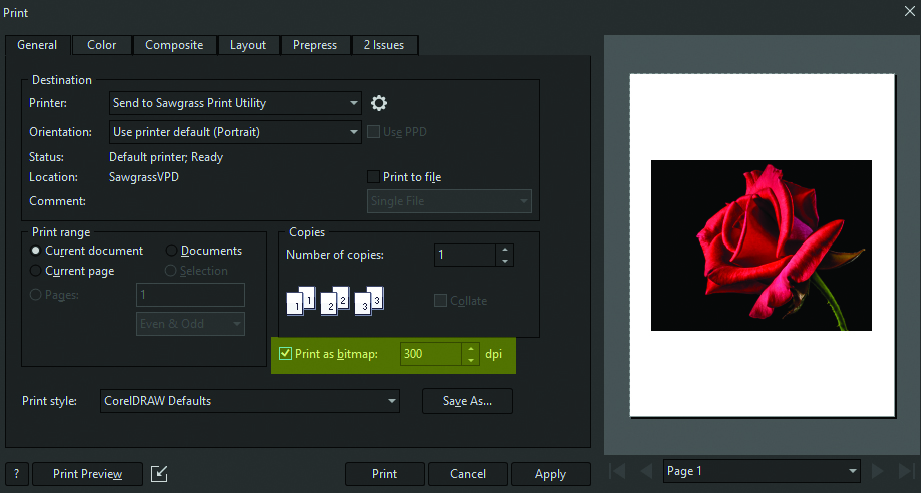
    • Print as Bitmap: If the software is running slowly or you are missing information in your design when it prints, convert your file using the bitmap features. 

    With this approach, you will be able to flatten your vector graphic into a bitmap format, which will make the program or print feature run more smoothly. To find this process, go to File > Print, select Print as Bitmap, and send it to your printer. 

    This method forces CorelDRAW to flatten your complex vectors for your printer (figure F).

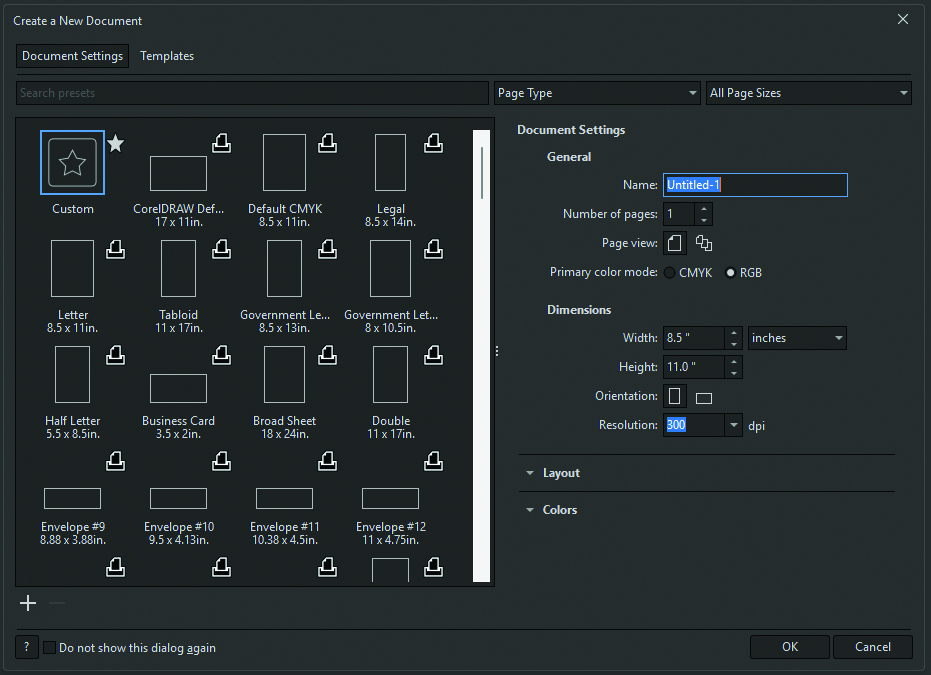
    • Custom Page Sizes: Creating and saving custom page sizes to your presets enables you to quickly align multiple designs on a single sheet of sublimation paper. To set the page size, go to Layout > Page setup, then enable the Page Size option. From there, choose Custom size and manually enter width and height (figure G). 
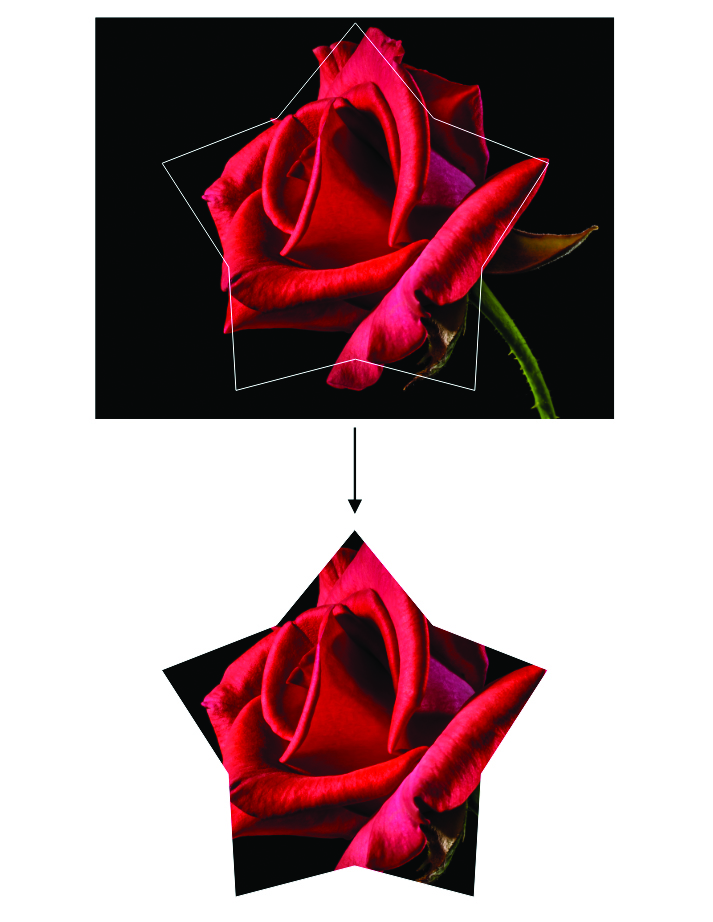
    • PowerClip: Use less ink with the PowerClip feature. This option lets you place bitmaps or vectors inside other objects. It is typically used for trimming artwork to a specific shape, placing photos into text, and creating complex layouts. 

    To use this feature, select your artwork and click Object > PowerClip > Place Inside Frame.

    Then, click within the shape where you would like the PowerClip placed (figure H). 

    Mastering these CorelDRAW tips will significantly reduce your production time and eliminate printing errors. By using shortcut keys and essential color management and leveraging printing workarounds, you enhance your time efficiency and protect both ink and supply materials from waste. 

    Implement these tips into your daily design workflow to ensure consistent, professional sublimation results every time.

  • SRG Promotes Rajanathan Balen to Executive Vice President, Global Trade

    SRG announced the promotion of Rajanathan Balen from vice president, supply chain management to executive vice president, global trade.

    The company noted Balen’s 21 years of distinguished service and said he has played “an instrumental role in shaping the company’s operational growth and supply chain strategy.” 

    He has assumed enterprise-wide responsibility for logistics, freight, international shipping, and fulfillment, while providing strategic oversight of customs- and tariff-compliance programs.

    Before joining the executive leadership team, Balen established a foundation in finance as an investment banker and equity trader. This experience brings a distinctive commercial lens to supply chain economics, cost modeling, and tariff exposure management. 

    “Raj has been an integral part of SRG’s growth and operational success for more than two decades,” said Richard Firkser, president and founder of SRG.

    “His deep command of global trade, logistics, and supply chain management, combined with his strategic thinking and proven leadership, makes him precisely the right person to lead this expanded division,” said Mark Waisbrod, CEO of SRG.

  • ACCELaser Expands U.S. Footprint with Connecticut Office

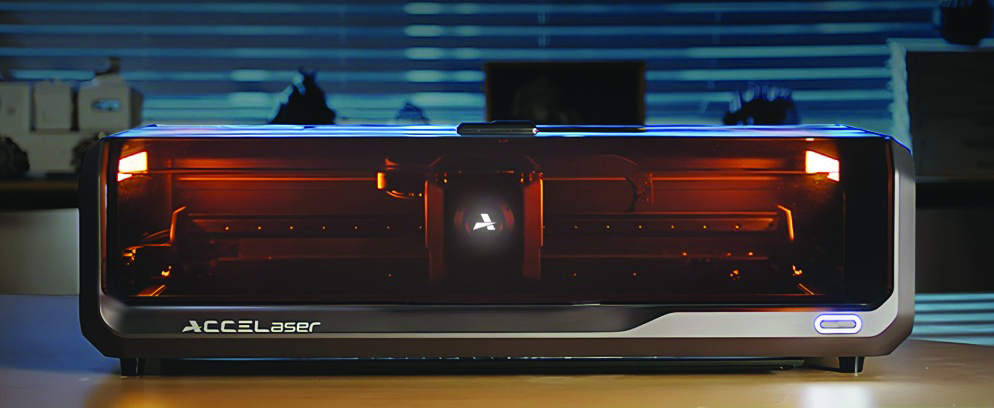
    ACCELaser announced the expansion of its operations into the United States with the launch of a new U.S. headquarters and support center in Bethel, Connecticut. The new facility will serve as a central hub for U.S. sales, technical support, training, product development collaboration, warehousing, and customer experience initiatives. 

    The expansion represents “a major step” in the company’s long-term investment in the U.S. market and reinforces its commitment to “delivering industry-leading support and innovation to customers across the United States.”

     “The goal has always been bigger than simply selling machines,” said Elisha Spector, U.S operations managing director. “We are building a long-term U.S. operation focused on customer success, education, support, and innovation. Customers want to know there is a real team behind the product, and that is exactly what we are creating here in Connecticut.”

    ACCELaser plans to build a growing education and content platform designed to help customers maximize production efficiency and explore new business opportunities using laser technology.

    “ACCELaser was built by people who truly understand this industry and the challenges customers face every day,” Spector added. “We believe the future of laser technology is about speed, accessibility, education, and helping customers grow profitable businesses. This expansion is only the beginning.”

    ACCELaser’s new office will continue expansions through 2026, with additional hiring planned across technical support, logistics, customer success, education, and operations.

    For more information, visit accelaser.com

  • A Decorated Celebration

    Row Brewer and Family

    On August 1, many gathered in Webster, Texas, to celebrate the retirement of industry veteran Roy Brewer, CRM.

    Founder of Engraving Concepts in Arlington, Texas, Brewer built a 55-year career serving the personalization and awards industry. Among many accolades, Brewer is in APA Hall of Fame, received the Founder’s Award, and was named Speaker of the Year. Brewer also established philanthropy at Engraving Concepts, establishing it as a Chairman level donor to ARIEF and funded the Roy Brewer Educational Scholarship.

    He was known to be an expert in CorelDRAW and served countless customers with their engraving needs. Expanding beyond equipment sales, Brewer’s knowledge served many through seminars and webinars at trade shows.

    Helping to honor his storied career were several APA past presidents.

  • Crystal D celebrates Memory Makers at WOW Day Event

    Crystal D, a supplier of awards and gifts, announces its 2026 employee-award winners at the company’s annual WOW Day recognition event. Crystal D holds quarterly Values Weeks, during which its Memory Makers recognize one another for exemplifying the company’s core values. Recipients are then considered for WOW Day honors, with winners chosen based on these peer nominations and manager input.

    “We are a company dedicated to celebrating achievement, and we are so proud to spend a full day each year honoring our own people,” said Jeanne Dahlgren, company president. “WOW Day is all about recognizing our incredible Memory Makers who bring passion, creativity, and heart to everything they do, day in and day out. I love WOW Day and am grateful for our team!”

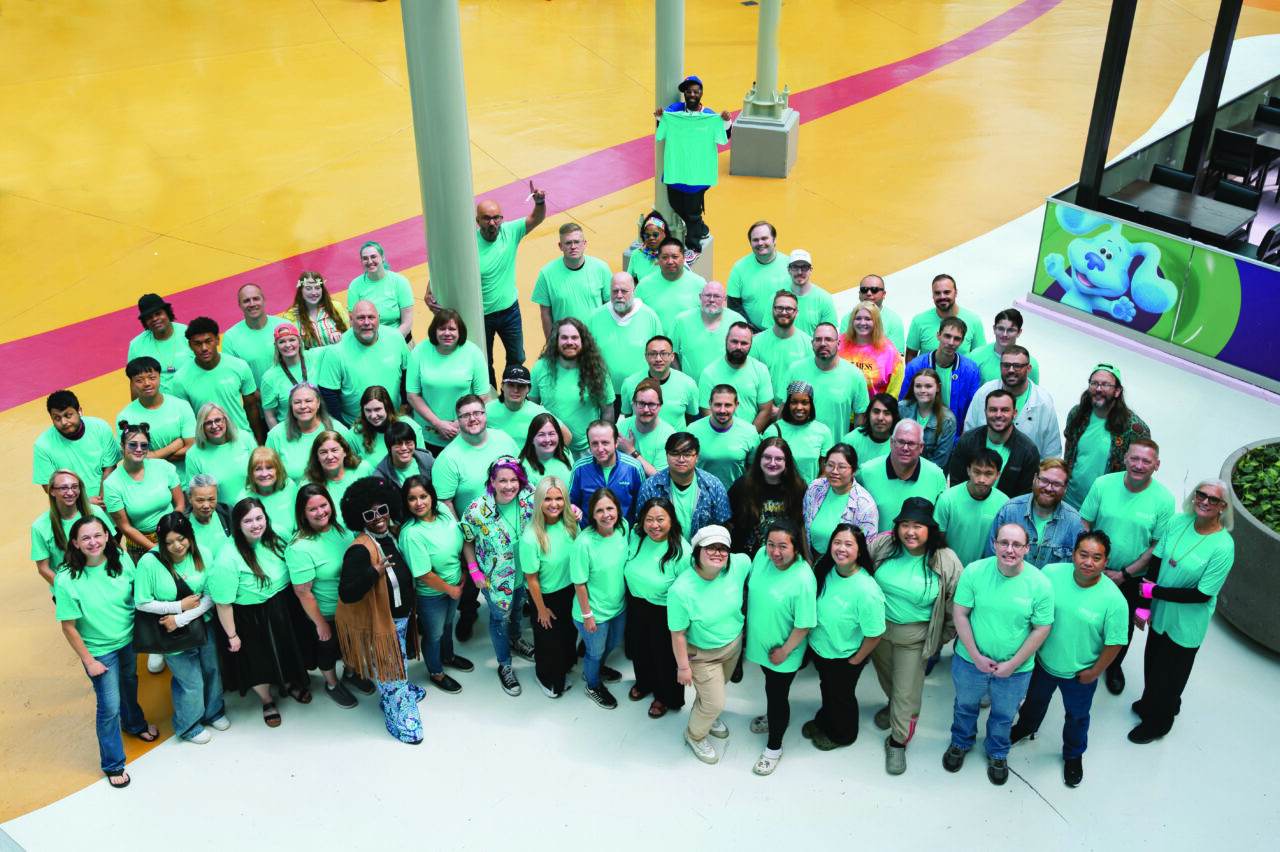
    At this year’s event at the Mall of America, Crystal D recognized 18 employees across 13 award categories. The 2026 honorees are:

    • Integrity Value Champion: Abby Havrilla (Art Department)
    • Quality Value Champion: Richard Denn (Production)
    • Respect Value Champion: Natalie Albers (Marketing)
    • Commitment Value Champion: Matt Boyles (Supply Chain)
    • Passion Value Champion: John Schenk (Production)
    • Grand Value Champion Award: Brenda Peralta (Customer Service)
    • Leadership Award: Tawauna Garner (Solutions)
    • Rookie of the Year Award: Derek Fradenburgh (Marketing) and Wattana Yang (Production)
    • Above & Beyond Award: Natalia Marin (Shipping) and Todd Phillips (Sales)
    • Rising Star Award: Michael Babcock (Sales) and Donna Rooney (Accounting)
    • Step Up Award: Shelley Bednarski (Sales) and Ava Imholte (Production)
    • Kick Ass Attitude Award: Ann Kirch (Graphics and New Products)
    • Expect Excellence Award: Mike Cygan (Production) and Erin Johnson (Sales)

    Winners of WOW Day awards receive a customized crystal award designed, created, and produced by company leaders. The individuals hold their titles for a year.

    Learn more at crystal-d.com.