Author: Angel Martinez

  • Looking To The Future: The unclear legal landscape of AI images

    Picture this: A new customer enters your printshop and asks you to print a thousand shirts using an image they have provided. 

    That image clearly depicts a character you recognize: Darth Vader. 

    You can tell that this image was created using artificial intelligence (AI). You also know the customer likely does not own the intellectual property or hold the copyright to the Darth Vader character. 

    This job request creates a moral, ethical, and even legal dilemma. 

    Do you accept the job to print a thousand shirts? Or do you inform the customer that since this is clearly a copyrighted image and they don’t own the rights, you can’t take on the job? Do you have a legal responsibility to turn the job down? 

    This scenario is happening more often in print shops nationwide and worldwide now that AI is used regularly to create images. Printers can get ahead of the dilemma by considering the hard questions first. 

    The Darth Vader Dilemma

    As a business owner, you might struggle inwardly with your own business ethics, but the real question is your legal responsibility. Since the image was created with AI, does that mean your customer owns the rights to it? 

    The United States Copyright Office currently holds that copyright requires some aspect of human authorship. 

    In other words, dictating prompts into an AI platform to create an image is not enough to establish human authorship and qualify for copyright protection. 

    But that doesn’t mean that anything made with AI can’t be copyrighted. The Copyright Office also says human-created AI images can potentially receive copyright protection. That distinction essentially depends on whether AI is a tool or the creator of a human author’s expressive choices.

    The Darth Vader image raises another trademark issue. Darth Vader as a name is a legally trademarked entity owned by Lucasfilm, a Disney subsidiary, and the character itself is protected by copyright.

    Deciphering the Dilemma

    Marshall Atkinson operates two businesses from his home base in Mesa, Arizona. One is Atkinson Consulting, and the other is Shirt Lab Tribe. He also runs a side project called the Midjourney Experience Academy, where he teaches people how to use Midjourney, an AI platform. Atkinson says he uses his preferred AI platform daily, and he keeps up with the ever-changing technology, trends, and even legal disputes.

    Midjourney has already had one major copyright-infringement ordeal. In June 2025, Disney and Universal sued the AI platform in federal court in California for copyright infringement. They alleged that Midjourney copied their images to train its system. 

    The plaintiffs also alleged that Midjourney produced and distributed images that incorporate their protected characters. While this might seem like an open-and-shut case in Disney’s favor, Atkinson has a different point of view.

    Atkinson contends that the legal lines are blurred when it comes to using specific prompts in Midjourney. Certain names and phrases are blocked as prompts, such as “Mickey Mouse” and “Donald Trump,” but others, like “Darth Vader,” are not. 

    “If it’s such a big deal, why not block everything mentioned in the lawsuit?” he asks. “Let’s take AI out of it, because AI only makes art generation easier. Why do they allow all these people to dress up like Star Wars characters and go to the convention or do their own fan art?” 

    In this instance, Atkinson argues most people aren’t using AI tools like Midjourney for commercial works. 

    Lisa Higginbotham, president and owner of FiveStar Awards & Engraving, says that businesses have a responsibility when it comes to accepting AI-created images for print jobs. She says businesses should do their best to avoid printing other people’s intellectual property. 

    “You cannot print a Darth Vader image because Disney owns it,” she argues. “People do it because they think they’re too small and that they won’t get caught. But it only takes one person turning you in or you posting it on social media, then it gets to Disney, and you’re out of business. I’ve been doing this for 26 years, and I don’t want Disney knocking on my door saying. ‘Shut it down.’”

    While Atkinson believes users should have more freedom with AI creation, he agrees that print businesses need to be wary of accepting jobs with AI-created artwork. 

    “For a business, you have to have your own set of rules,” he said. “This is your ethics and what you do. I wouldn’t use other people’s IP because you could be open to a lawsuit.”

    A Different Perspective: From User to Developer

    Meanwhile, on the other side of the world, Chris Minn operates his company, Digital Ink, in Muscat, Oman. 

    Digital Ink is a hybrid marketing collective focused on consultancy and AI development for print-software vendors and industry leaders around the world. Minn and his business partner are set to launch their own AI platform called GEORank, built to help print service providers sell their products in the AI world. 

    “GEO” stands for generative engine optimization, and the platform will use it to rank printers in search results. Minn says more people use AI over traditional search engines like Google now.

    “You may have been a really good print shop for 30 years as a family-run business through recommendation, word of mouth, and Google results,” he states. “But if 50% of Google search is now gone, that’s 50% of people that won’t find you.” 

    Businesses that don’t adopt a GEO strategy now could potentially be outmatched by a competitor simply because they’re more organized with their content, he adds. 

    Minn previously worked for a web-to-print B2C gifting company and says he understands how AI fits well into the personalization segment of the print industry.

    “The whole point of personalization is being able to give someone something truly one-off, instantly and affordably, and that’s just not something a human design team can do at scale,” he suggests. “AI fills exactly that gap.”

    But that efficiency and convenience can come at a cost. Without checks and balances, Minn says business owners could find themselves in legal hot water for inappropriate or unlicensed images. 

    As someone following the AI-legality debate, Minn has watched several lawsuits closely and stressed that two separate conversations are happening around AI-generated artwork: 

    1. Ownership: whether you can copyright something you created with AI. 

    2. Copyright: whether using an AI tool exposes you to someone else’s copyright claim. 

    Minn says he looks to the U.S. Copyright Office and ongoing U.S. lawsuits for guidance in his work. He says he believes the U.S. is leading the global legal conversation on AI. 

    Navigating the Unclear AI Pathway

    As the courts continue to debate these conversations, it’s still crucial for business owners to build contingency plans for themselves and their customers. 

    Keep it human: Atkinson suggests uploading a photo or hand-drawn sketch onto the platform rather than simply typing prompts. Overall, he believes the use of AI is a personal decision.

    Maintain a record: Minn concurs that adding a human touch to AI image creation could be a safeguard against copyright-infringement lawsuits. He says his own pathway to avoid AI legal jeopardy comes back to a handful of habits, such as keeping a record of the human work that went into the design, knowing and understanding the AI vendor’s terms, and keeping the prompt history and source files used during image creation.

    Establish boundaries: To avoid headaches with unlicensed images or intellectual property, Minn suggests adding a legal message to automated upload systems and requiring submitters to acknowledge that the image is their original artwork. An attorney should also be consulted for this step, since language and laws differ state to state. He said business owners should also keep up-to-date on the U.S. Copyright Office’s reports. 

    Building New Standards 

    Minn contends that from a strictly legal perspective, there needs to be a recognized and enforced industry standard for AI-image usage so that filters can be universally put in place to avoid criminality for copyright infringement and trademarks. 

    “My father always said to me, ‘The internet is one of the best and worst things ever,’” Minn said. “It gives you so much information you can achieve anything, but also criminals will manipulate it as well. 

    “Until we get some kind of international industry legal standard [for AI], we run the risk of those filters not being on all large language models,” Minn concludes.
  • Coordinated Recognition: How awards retailers can bundle orders with soft goods for better retention and revenue

    Demand for personalized soft goods has grown sharply over the past few years as buyers increasingly seek out a single partner who can support the awards, apparel, and related merchandise for an entire event. Customers want a single, comprehensive purchasing solution or, at the very least, want a retailer that can handle the time-consuming process of sourcing multiple vendors. For personalization retailers, bundling standard products like trophies, crystal awards, and plaques with soft goods represents a natural and highly lucrative growth opportunity. 

    More Products, More Recognition

    One of the core benefits of adding soft goods to an awards bundle is that it gives the customer more ways to recognize their recipients. 

    “The award recognizes the achievement, while a personalized shirt, cap, or bag gives the recipient another way to represent the team, organization, or event afterward,” explains Josh Ellsworth, chief revenue officer of STAHLS’.

    On the product mix, Noah Winters, owner of Hydbond, says promotional products are the natural first step. 

    “Tote bags, key chains, and similar items fit right alongside a trophy order, especially laserable and UV-printable goods that run on equipment many award shops already own,” Winters points out. “Custom hats can work well too, depending on the customer and the occasion.” 

    Wearables are often a strong fit as well, Ellsworth adds, pointing to T-shirts, performance shirts, hoodies, quarter-zips, caps, beanies, bags, towels, and blankets. He recommends starting with wearable products that are easy to size, personalize, and reorder, then expand the product mix based on what resonates most with the retailer’s customers. 

    Scaling Revenue Without Diluting Margins

    Building comprehensive bundles helps retain customers and sets retailers up for the long term by dramatically increasing average order value.

    Winters notes the cascading effect of how building strategic bundles impacts margins and volume. 

    “We see the effect of these bundles in our own business and across many of our customers’ businesses,” states Winters. “A well-built bundle can turn an order for 20 hats into an order for 20 hats, 20 shirts, and 20 key chains.”  

    Ellsworth echoes this sentiment on a larger scale, calculating that adding just a $15 personalized wearable to an order for 100 recipients instantly generates $1,500 in incremental revenue.

    That said, retailers need to balance increased volume with profitability so they aren’t diluting margins. Accounting for factors like the full cost of delivery, which encompasses the blank product, decoration, setup, and labor, helps maintain those margins, as does a reasonable spoilage allowance. The bundle should be priced around the value and convenience it provides. 

    Ellsworth notes that the customer is paying for a coordinated solution delivered correctly and on time, not simply the lowest possible price on each item, so discounts should align with broader business pricing standards. 

    “Never cut yourself short just to close a sale,” Winters agrees. “A bundle discount should make the order bigger, not make the business weaker.”

    Bridging the Production Gap

    The upside to building lucrative bundles is that retailers can start without additional overhead or staffing. 

    “There are plenty of fulfillment companies that will customize hats and other soft goods and ship them white label directly to the end customer, so a shop can offer these products without buying any equipment,” says Winters. The trade-off, he notes, is control. 

    Retailers interested in partnering with third-party fulfillment should take extra steps to vet the companies they choose to work with. Key factors like quality assurance, inventory capacity, and speed to market can all impact how feasible it is to contract out work and still maintain a profit. 

    Ellsworth adds that shops with existing in-house equipment can also run a hybrid production method of outsourced and on-site printing. For example, preprinted transfers from a third-party fulfillment company can create a new revenue stream. 

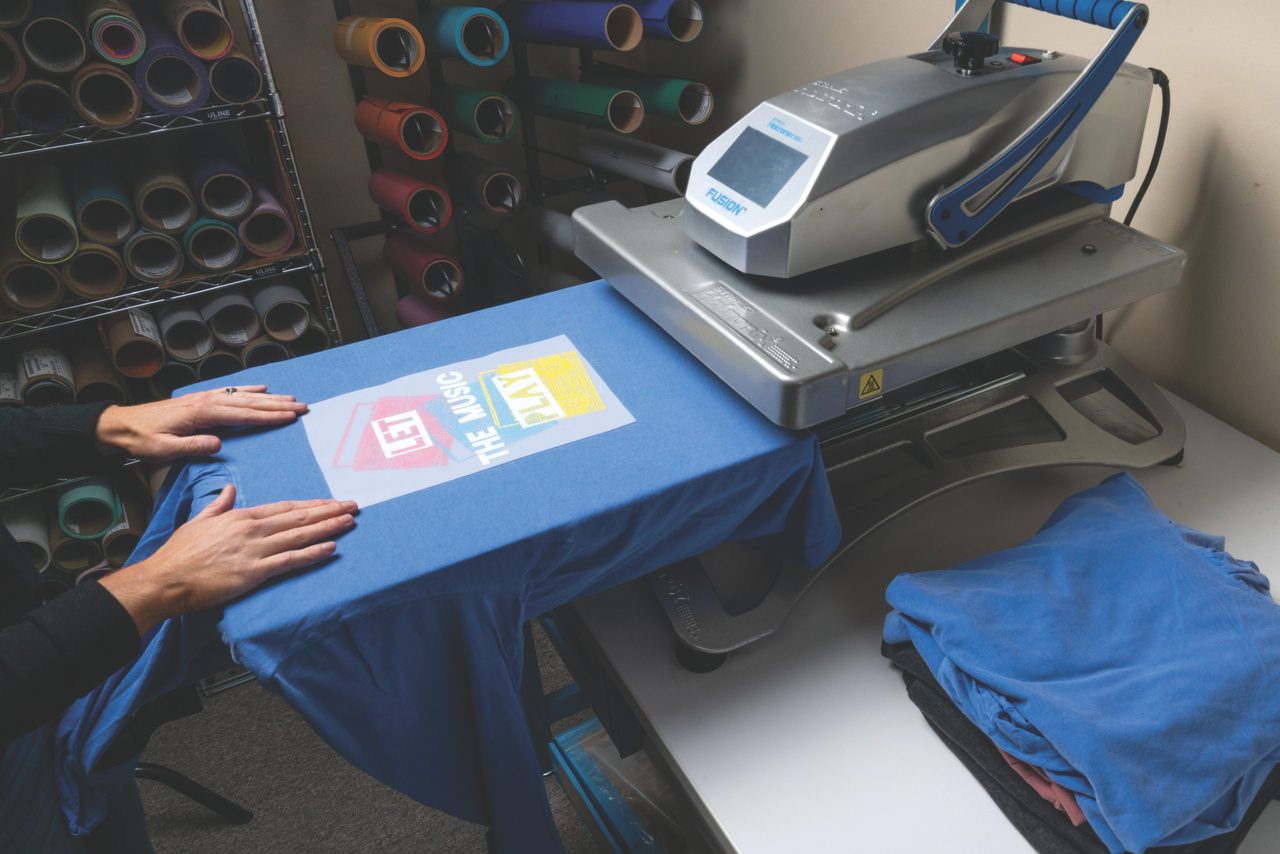
    “If the retailer already has a heat press, the opportunity becomes even more accessible,” he stresses. “Ready-to-apply custom transfers allow one press to decorate T-shirts, hoodies, bags, caps, and many other products with the right accessories.” 

    Similarly, retailers equipped with lasers and UV printers can easily run promotional items like tote bags and key chains.

    Modern software also makes closing these multi-item sales easier than ever. Winters highlights that “tools like ProofBolt let shops create and share product mockups instantly, even from a phone, so customers can see their design on a hat or tote before they buy.”

    Securing Target Markets 

    Expanding offerings naturally reaches retailers’ existing customers, since bundles work well with everything from youth sports and school programs to corporate recognition and milestones. 

    To identify the best products for a specific client, retailers should always come prepared with practical questions about the award’s purpose and the overall budget. 

    Ellsworth advises presenting a manageable, standardized selection of items rather than handing a customer an overwhelming catalog. As order volume scales, an organized workflow becomes critical, particularly for managing sizes, colors, and order accuracy on apparel. By standardizing popular items, cross-training employees, and establishing firm quality checkpoints, shops can comfortably execute high-revenue bundles without disrupting their core awards-production schedule. He also points out that looking beyond the award recipients helps. 

     “Coaches, volunteers, staff members, parents, sponsors, and spectators may all need apparel or accessories tied to the same event,” Ellsworth says. “That is often where a single awards order can expand into a much broader program.”

    Winters adds that reviewing past orders from longtime customers can also help retailers build out a compatible set of products for a bundle. 

    “A sports banquet points toward team hats and bags, while corporate events point toward branded apparel and desk items for staff,” he explains.

    Sharing a mockup of a hat or tote bag with that customer’s logo can also help, says Winters, since many customers “don’t realize what they want until they see it.”

    When retailers are able to pair soft goods like apparel, headwear, and accessories with awards, they’ll benefit from increased revenue, and a stronger position as a one-stop shop. That convenience will be attractive to both existing customers and new prospects.

  • Marco Awards Group: Celebrating the past and building for the future

    For many distributors, the origin story begins with a small, unassuming shop. For Marco Awards Group, that story goes back to Quebec nearly 63 years ago, when the company’s founder, president, and CEO, Marcel O. Bizier, decided he wanted to move from Canada to Florida for a change of scenery and warmer weather. 

    Marcel Bizier started his journey into the awards industry with $42 in his pocket as he traveled to the U.S. While he initially only made it as far as East Hartford, Connecticut, he started Discount Trophy in 1977. The small awards business became the foundation for the wide-reaching distributor it is today. 

    From the late 1970s through the 1980s, the company expanded operations, including developing a wholesale division, launching a wholesaler catalog, adding distributor lines, and bringing several innovative products to the market. The business also purchased manufacturing and tooling facilities to expand its production capabilities. 

    In 2004, the business formed Marco Awards Group to incorporate all its companies under the Discount Trophy umbrella. Today, the company is headquartered in Vernon, Connecticut, just a short drive from where Bizier started his business. 

    According to Gregory Kolenut, national sales manager at Marco, Bizier founded the company on key principles of hard work, commitment to quality, and customer service. 

    “Marcel has always focused on investing in people and building for the long term,” says Kolenut. “Now, he’s mentoring the next generation of leadership to carry the company forward.” 

    As Marco Awards approaches its 50th anniversary in 2027 with more than 20 company-owned domestic distribution centers, including locations in both Canada and Puerto Rico, it still maintains a core focus on the awards and recognition industry, and has benefited from that focus. 

    Growth over Time 

    In addition to Bizier’s focus on a strong company culture and commitment to quality of service, Marco’s longevity and staying power have benefited from several strategic acquisitions. 

    Kolenut points to a few key acquisitions over the years, including Plastic Plus Awards; Alenite Corporation; a multimillion-dollar Chicago-based manufacturing company, Freeman Products Worldwide (through which Kolenut joined the company); and most notably, Barhill Manufacturing, a leading supplier of corporate awards. 

    The Barhill acquisition, in particular, marked a major move, since the manufacturing company already had a strong reputation for high-quality corporate recognition products dating back to 1954. With the third generation of Hilaire family members still managing the company, it operates as a stand-alone division of Marco Awards Group. With hundreds of original products, all manufactured in the USA. The Barhill Retail Catalog has long been recognized in the industry as the top resource retailers rely on to sell high-quality corporate awards.

    Expanding the Network 

    Over the past five decades, those strategic acquisitions have also coincided with continual additions of warehouses and distribution centers to the company’s nationwide network. Despite this growth and expansion, Bizier’s core commitment to quality has remained. 

    Between 2008 and 2009, the company established a quality control department to supervise offshore vendors and ensure any incoming products met Marco Awards Group’s standards. 

    Soon after, the company set up an office in China and conducts plant inspections at select locations to further enhance quality assurance.

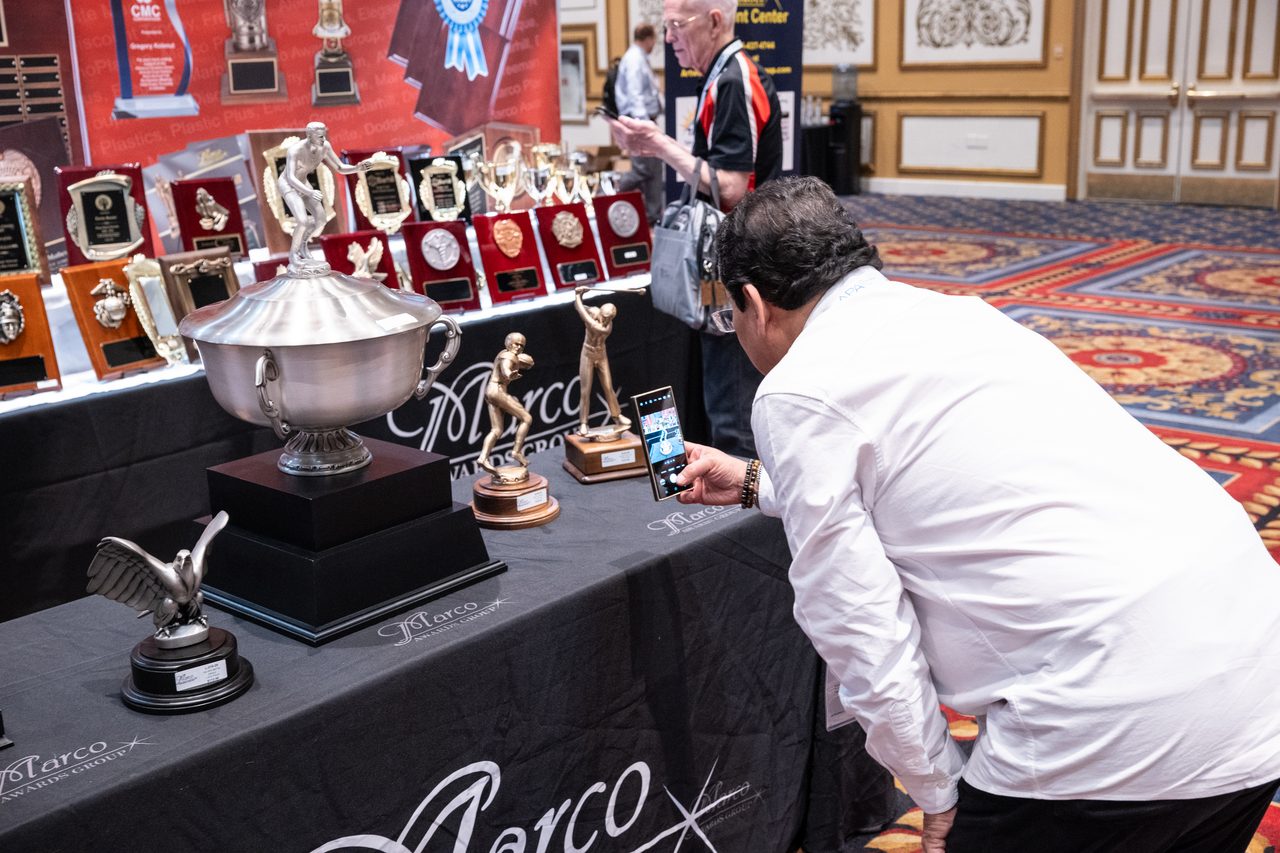
    Today, Marco Awards Group offers over 1,000 styles of items in popular categories like crystal and glass awards, assembled cups, plaques, corporate awards, and hundreds of styles of trophy components, resin sports sculptures, sublimation supplies, and equipment—all showcased in a 1,100-page master wholesale catalog.

    Marco Awards continues to make significant moves, including a new warehouse purchase in Texas and expansion of its Vernon headquarters with an additional 50,000 square feet. Marco Awards Group has also expanded its fulfillment division to help customers handle production during peak periods or manage large orders.

    Building for the Future

    With its upcoming anniversary, Kolenut says leadership at Marco Awards Group feels celebratory while also looking ahead to how they can take the company into the next 50 years with the same hard work and competitive spirit. 

    To lead Marco Awards into the future, Kolenut says Bizier is mentoring the current leadership team. 

    The company’s forward-looking leadership team features Kolenut and Bizier family members, including Angel Fillmore, director of finance with decades of experience and daughter of the owner, and Christopher Smith, chief operating officer and nephew of Marcel, who oversees all operations to ensure Marco’s facilities deliver results. Kolenut meanwhile leads the company’s sales force across eight dedicated reps visiting customers nationwide and is heavily involved in marketing and product management.

    Through their combined experience, the team can draw on Bizier’s vast knowledge while applying their cumulative years of experience to prepare Marco for the coming decades. 

    “The goal is to honor Marcel Bizier’s legacy while also shining a spotlight on the team he has built for the future,” Kolenut adds.  

  • What’s in a Name? Using variable text for large orders

    A common question I hear is whether a laser business can efficiently handle a large personalized order on a short deadline. 

    For example, when a customer needs 200 name badges, each measuring 3 by 2 inches, and provides the names in an Excel spreadsheet, you can streamline the process by using LightBurn’s variable-text feature. Build the badge once and use the spreadsheet data to automatically change the names, eliminating the need to create 200 individual designs.

    This process starts before opening LightBurn. Create an Excel spreadsheet with a clear column heading, like Name, and place one proofread name on each row beneath it. Once the list is complete, I save it as a CSV file. That column heading becomes the data field I use when connecting the names to the text element in my LightBurn design.

    Build a Master Design

    Once names are entered, I create a finished badge layout in LightBurn. I set up the badge shape, logo, border, decorative elements, and laser settings exactly as I want them to appear on every piece. Then, I add the text object that will receive the variable name.

    This approach gives you one dependable master design, saving time. The badge artwork stays fixed, while the name field changes from one record in the CSV file to the next. This keeps the layout consistent throughout the run and removes the need to type, paste, center, and proof individual names repeatedly.

    Before I connect the data, I make sure the text object is on the proper layer, with the correct engraving settings. I also choose a font and text size that will engrave clearly at the finished badge size.

    Sort Names Before Importing

    One step I recommend before importing is to separate short and long names into two different CSV files. That’s because a short name may look best in a larger font, while a long name may need a smaller size or a slightly adjusted layout to remain within the badge boundaries.

    For example, I might place “Devon Reed” and “Maria Lopez” in a short-name list, while placing “Christopher Alexander” in a long-name list. 

    You can run the short-name group using one layout, then make the necessary text-size or spacing adjustment and run the long-name group separately. This ensures badges are visually balanced and prevents a long name from crowding the edge of the design.

    Connect and Double-Check the Data

    Once the CSV file is ready, I use LightBurn’s variable-text workflow to import the data and link my badge’s name-text element to the Name column. The badge shape and all fixed artwork remain unchanged, and LightBurn advances through the spreadsheet one record at a time, replacing the text field with each successive name.

    Before sending the job to the laser, I check several entries in the list to make sure they are correct. I review short names, long names, and entries near the end of the file to confirm that the data imported correctly and the text fits the layout.

    The final check should include: 

    • Confirming the CSV column heading is correct
    • Reviewing spelling and capitalization in the spreadsheet
    • Checking for blank rows or extra spaces
    • Verifying the text is centered and assigned to the correct laser layer
    • Testing the longest name before beginning the full run

    Saving Time and Effort 

    Variable text can save you a tremendous amount of setup time on a variety of goods like badges, award plates, tags, place cards, and similar personalized projects.

    The larger the order, the more valuable the workflow becomes, since it saves you exponentially more time and helps reduce errors. By preparing clean CSV data, building one solid master design, and grouping names by length before production, you’ll spend less time on repetitive editing and more time producing consistent, professional results.

  • Leaving A Legacy: Why building a succession plan is important for all businesses

    The nation faces a succession-planning (also called transition or exit planning) problem. 

    According to a recent PwC study, 44% of family businesses report succession planning as an issue. 

    It’s a process some tend to balk at for a variety of reasons, including the complicated details, emotional component, financial matters, and an unknown future. 

    However, succession planning can help ease the challenge of determining a business’s future and make it as smooth as possible. 

    Plan, Plan, Plan

    Sources suggest succession planning is best approached as a three-pronged process: financial evaluation, business development, and the human factor. 

    “What most people want to avoid is liquidation, of course,” says Lori Moen, former awards-and-trophies business owner and current executive director at Catalyst Group ECR. This business specializes in coaching and exit planning. “There’s very little wealth to be harvested from that path, and as an owner, you lose that legacy you worked so hard to build.” 

    According to Moen, there are solid steps to take to start the journey. 

    1. Assemble a team: Owners and anyone else invested in the transition should gather trusted advisers to support the process. That may include business consultants, accountants, tax planners, and attorneys. This step matters no matter the size of the business, whether it’s staying in the family or being sold to an interested third party. 

    2. Budgeting time: Mapping out the exit plan with several years’ off-ramp can give you the best opportunity to get the most out of your company and legacy. Moen notes that in her last four years owning a company, she began honing her exit plan. “I focused on setting up some standard operating procedures, knowing who my top customers were, being diversified, doing the steps to get it ready for sale,” says Moen.  

    3. Get a valuation: It doesn’t need to be a full valuation, but it can give you an idea of what you can bring the business to market for. Have a clear picture of your expenses and whether you run your business to minimize taxes. 

    4. Build the business: Customer diversification, vendor diversification, and reduced owner dependency are all critical to understanding a business’s potential value, particularly if a financial owner is looking to buy. They often focus more on the future value the business can offer than the legacy.

    Build Up Your Team 

    Employees are also an important component of a business’s value. 

    “That institutional knowledge is so critical. As the owner, if you were to step out of the business, how would it do for three months? Would it thrive? Would it survive, or would it fall apart?” Moen asks.

    Moen emphasizes recognizing and building employee skills during a transition. She points out that she almost missed out on a very qualified buyer during her sale: her shop’s general manager, who ended up buying the company.

    “I almost missed the opportunity; he gave me his resignation because he wanted to start his own awards shop,” she says. “I had never had that conversation.”  

    Justin Varn, current president of the Awards and Personalization Association (APA) executive board, who took the helm at Awards4U from his father, Sam Varn, in 2025, also believes employee confidence and skills were key to their transition. 

    “My motto is if we have somebody who wants to learn a skill in the business, do that so that I can turn to you and people can ask questions,” he says. “It establishes what I would consider a champion who knows exactly what they’re talking about.”

    The Human Factor

    The third leg of the transition is acknowledging personal needs.

    Life after exiting a business contains several unknowns, and it’s a major lifestyle shift for most owners, so it’s crucial to consider important questions like what you’ll do in retirement. 

    Moen says owners don’t want to end up stuck, regretting the exit because they haven’t considered what life will look like after succession. 

    “I’m not just talking about playing golf,” she stresses. “What specifically do you want to do? You’ve been used to driving a company. That doesn’t just go away.”

    Owners also need to do deep dives on what budgets and finances will look like post-exit. That may include hard conversations on lifestyle, budgeting, and what your financial situation truly is.

    Identifying personal needs and goals can be emotionally challenging. Business coaches are solid resources to get you on the right path.  

    Family Matters 

    Family business transitions can get awkward quickly, so a good starting point is determining who in the family is interested in taking over the business, what roles they will serve, who is responsible for what, milestone dates, and so on.  

    Moen suggests that owners have separate meetings and understandings between the first and second generations of the family.  

    “That first generation did a lot of the heavy lifting, and they may feel like the second generation just gets to take it over,” she points out. “But the second generation has to scale it, and if that second generation is buying it, they have to be able to service that debt.”

    Setting clear expectations and boundaries can help the handover be as seamless as possible between generations, and ideally sidestep some of the personal nature that comes with working with family. 

    “It forces you to have hard conversations that people don’t always want to have,” says Varn. “You need to have that conversation, and then formulate a plan as far as what needs to happen next.” 

    The Varns followed this process, then took that plan to their managers to keep them informed and ask for their guidance during the transition. That included working with Justin to understand the ins and outs of the family’s decisions.

    Varn said he had already worked in many departments, but stepping into the top position gave him a deeper understanding of operations. 

    He also mentioned that family transitions aren’t always smooth sailing; things can be challenging for all involved, but the plan helps you move forward. Varn suggests that setting boundaries early can help clarify the path. 

    A Team Effort

    Above all, resources and help are available for succession planning. Several firms specialize specifically in helping business owners map out a plans. 

    “The needle has definitely moved with more people talking about and being aware of transition planning and trying to take action,” says Moen. “But my biggest challenge is still educating business owners that you don’t do it by yourself. Have a group of people around the table.”

    Varn agrees and urges those looking to exit the business to consider options beyond simply closing shop.  

    “Think about who in the industry or in your own shop might want to take it on and plan for it,” says Varn. “There are curves in the road. There are roadblocks. But if everybody is on the same page, then it’s easier to keep moving forward and not lose sight of that end goal.”  

  • No Longer Leasing, Marco Purchases Dallas Facility

    Marco Awards Group recently purchased the 52,000-plus-square-foot building housing its operations in Dallas, a major step forward in the company’s long-term growth strategy. Previously leased, the facility has proved to be an ideal location with its proximity to major highways and accessibility for regional distribution. It is one of three Marco warehouses serving that region, along with locations in San Antonio, Texas, and Gonzales, Louisiana. In addition to acquiring the building, Marco Awards Group has also purchased a large tract of land adjacent to the property, providing space for expansion. 

    “This purchase helps solidify our long-term goals in the Southwest market and is a commitment to our loyal customers,” Marco president Marcel Bizier said.

    The acquisition underscores Marco Awards Group’s commitment to the industry and their valued customers, strengthening its long-term presence in the region and ensuring continued excellence in service, logistics, and customer support.

    For pickup customers, the facility’s address is 4443 Bronze Way, Dallas, Texas 75236.

  • JDS Acquires Supplier of Acrylic Braille Balls

    JDS Industries has acquired Small Balls, a leading supplier of products for ADA-compliant braille signage. The Small Balls product line includes acrylic braille balls in a variety of colors, as well as brass and stainless steel options, installation bits, cutters, and other accessories. 

    These additions complement JDS Sign Supply’s existing line of ADA-compliant substrates, giving sign professionals convenient access to braille balls, tools, and substrates in a single order while helping reduce shipping costs and fulfillment time.

    The acquisition underscores JDS Industries’ commitment to expanding its Sign Supply Division, investing in products and services that help customers work more efficiently and grow their businesses. Small Balls inventory is available now at JDS and stocked nationwide for fast shipping. See JDS’s Small Balls products at bit.ly/4x1l3Vq.

  • STAHLS’ Draws Full House for Heat Press Pro Day

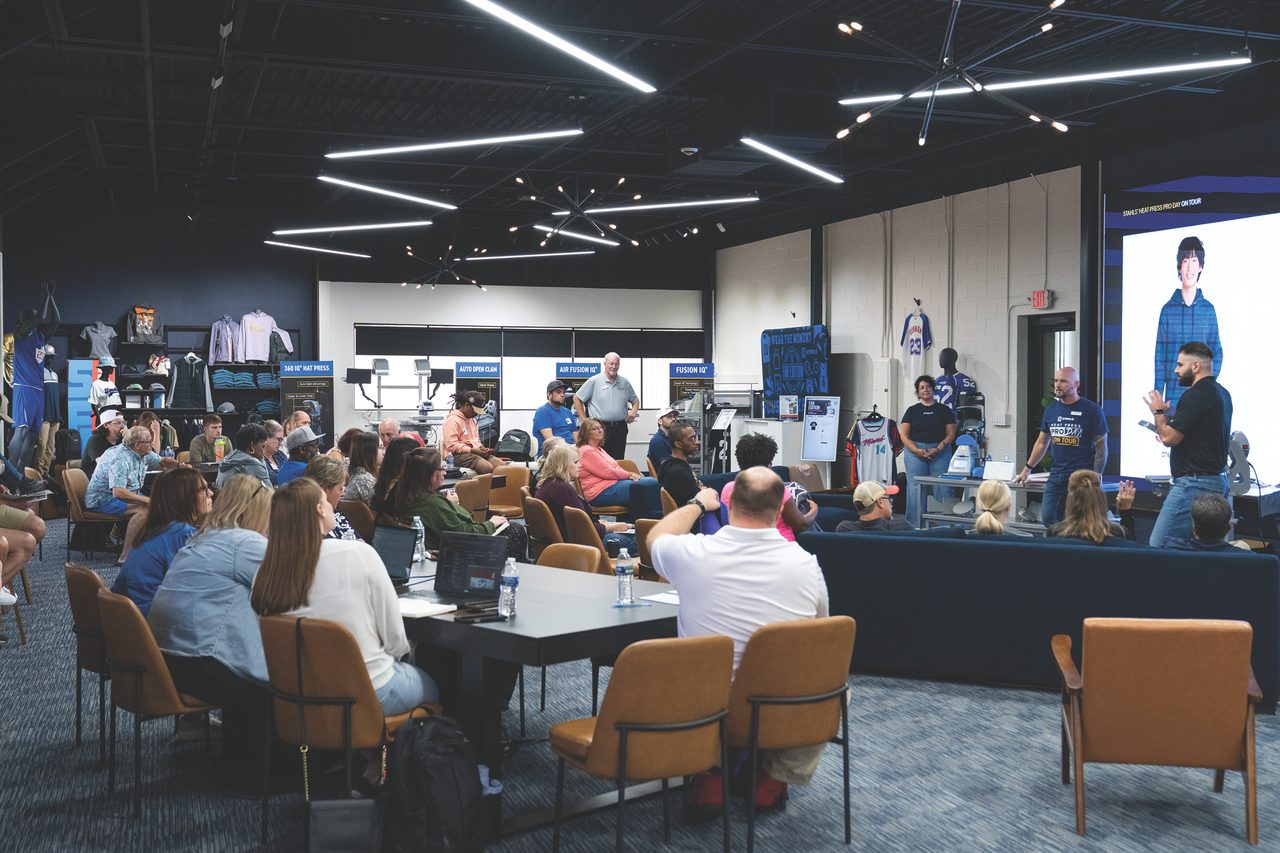
    STAHLS’ recently welcomed apparel decorators, print professionals, and business owners from across the region to its SF-1 Fulfillment & Innovation Center in Chesterfield Township, Michigan, for a sold-out Heat Press Pro Day, giving attendees an up-close look at the latest innovations in heat printing, custom transfers, and print-on-demand fulfillment.

    Designed as a hands-on educational experience, the event combined live product demonstrations with practical business strategies, allowing customers to explore new technologies while learning how to improve production efficiency and expand their service offerings.

    Leading the technology sessions were STAHLS’ experts Lizz Riedy, Frank Good, and Vincent Fiore, who demonstrated the company’s newest heat-printing solutions, including LIQUID 3D, premium custom transfers, UltraColor MAX, direct-to-film (DTF), and specialty embellishment technologies. Throughout the day, attendees were able to compare decoration methods, ask technical questions, and see firsthand how different transfer solutions can help streamline production while delivering premium results.

    The event also looked beyond decoration by exploring the growing role of print on demand in today’s apparel industry. Heat Press Pro Day presenter Dave Conner focused on STAHLS’ Fulfill Engine, highlighting how decorators can leverage integrated fulfillment solutions to reduce inventory, automate order processing, and support e-commerce growth with scalable on-demand production.

    More than a product showcase, Heat Press Pro Day created opportunities for meaningful conversations between customers and STAHLS’ technical specialists. Participants shared business challenges, explored new production workflows, and discussed strategies for adding premium decoration techniques and new revenue streams to their operations.

    “This was one of the best Heat Press Pro Day experiences we’ve ever hosted,” said Kelly Walters, experiential marketing manager for STAHLS’. “We had a full house of highly engaged customers who came ready to learn, ask questions, and discover what’s next in apparel decoration. The excitement around technologies like LIQUID 3D and the business opportunities created through Fulfill Engine made for an incredibly interactive day.”

    As demand continues to grow for faster turnaround, premium finishes, and on-demand production, educational events like Heat Press Pro Day are becoming an important resource for decorators looking to stay competitive, STAHLS’ said.

    For future Heat Press Pro Day dates and other educational events, visit stahls.com.

  • JDS Sign Supply Announces New Sales Director

    JDS Industries is pleased to announce that Josh Culverhouse has joined the company as sales director for its Sign Supply Division.

    Culverhouse brings more than 20 years of experience across the sign, graphics, materials, and digital-commerce industries, with a background spanning technical support, business development, market expansion, and sales and marketing leadership. His career includes experience with SquareOne Graphics, Gauge, ORAFOL Americas, and most recently UPM/Metamark, where he supported market development and customer relationships throughout the United States, Canada, and Latin America.

    In his new role, Culverhouse will lead JDS Industries’ Sign Supply Division, focusing on strengthening customer and vendor relationships, expanding market opportunities, and supporting continued growth.

    “JDS has a well-earned reputation for outstanding customer service,” Culverhouse said. “I’m looking forward to contributing to that legacy and helping build even stronger relationships across the industry.”

  • APA Announces New Executive Director

    In October APA announced its longtime executive director Louise Ristau, CAE, would step down, and Dave Pomeroy, who had been serving APA as its director of business development, was appointed as her successor. 

    For over 25 years, 15 as executive director, Ristau was a steady hand supporting APA through years of strategic development, association management, and brand awareness. 

    During her tenure, Ristau was a supportive force when membership voted to change the organization’s name from Awards and Recognition Association to the Awards and Personalization Association in 2015. The initiative and implementation was critical to better position APA in an industry that was growing beyond awards and trophies, actively diversifying into personalization. Ristau held an unmatched knowledge about the industry and the APA membership.

    “While serving as president of [APA], an enormous amount of my time was spent working alongside Louise as we undertook the rebranding from ARA to the Awards and Personalization Association,” said Jeanette Brewer-Richardson of Engraving Concepts. “It was a significant project, and I couldn’t have asked for a better partner in making it happen. Louise brought leadership and dedication to our association in everything she did.”

    Stepping into the role is industry veteran Pomeroy. No stranger to the awards and personalization industry, Pomeroy is former publisher of A&E (Awards & Engraving) magazine and served as president of parent company National Business Media from 2019 to 2023. Under his leadership Pomeroy built significant growth in Graphics Pro magazine and the corresponding Graphics Pro Expo. 

    Pomeroy brought that knowledge to APA where in 2026 the APA International Personalization Expo saw a 10 percent increase in booth space over 2025.

    “Louise Ristau has done so much to set APA up for success going forward, both strategically and financially,” said Pomeroy. “I’m ready to jump in as APA continues to deliver exceptional member value: great tools for industry communication and education, plus an Expo that leaves everyone in attendance fulfilled, inspired, and excited to be a part of this great industry community.”

    On her time at APA Ristau said, “It has been an honor to serve as APA’s executive director, and I’m grateful for the friendships, experiences, and accomplishments we’ve shared along the way. I know APA is in excellent hands with Dave Pomeroy. He brings the experience, passion, and vision needed to lead the association forward, and I am confident its best days are still ahead!”