
For the modern personalization retailer, growth goes beyond simply upscaling production equipment and space. In some instances, growth for the practical retailer comes from finding new ways to sell customized goods quickly and profitably. In others, from tapping new customers they’ve never explored before.
These are just a few reasons why small-format personalization continues to gain traction. Compact laser- engraving systems—typically featuring small tables around 24 inches by 12 inches, standard electrical power, and limited footprints—help retailers expand product offerings and shorten turnaround times. That approach creates a practical path to new revenue while still delivering products that have a personal touch and longevity.
Mike Dean, vice president of sales and marketing at Epilog Laser, says one of the clearest advantages is the ability to expand product offerings without incurring overhead.
“Small-format laser-engraving and -cutting machines empower retailers to expand their product mix without expanding their footprint,” he says.
Meeting New Demands
That flexibility is crucial in a market where many businesses are balancing limited production space, increasing costs of doing business, showroom needs, fulfillment demands, and a wide range of custom jobs.
Plus, the flexibility of small format helps retailers respond to changing customer expectations around order times.
“Today’s consumers expect fast access to personalized products, with little to no wait time,” adds Dean. “Small-format laser systems allow retailers to meet that expectation by bringing production directly onto the retail floor or into compact workshops.”
For shops that handle personalized orders, short runs, and detail-sensitive jobs, that speed can become a real competitive advantage.
Dean says the biggest benefit of bringing small-format engraving in-house is straightforward. Retailers can turn jobs over relatively quickly without waiting for a third party. What’s more, personalizing these goods in-house gives that business a tighter rein over quality and the ability to make last-minute changes.
Changing Workflows
Vikram Agrahar, founder of EzCarve, points to workflow as another important part of the equation, particularly systems designed specifically for smaller objects. EzCarve, for example, is a floor-standing, kiosk-style machine with a roughly 1-square-foot footprint, built-in cooling and smoke filtration, and a design that lets operators roll it into place and set up in under two minutes. It features a system built exclusively for drinkware engraving, reducing the extra setup steps that often slow production.
“We have had customers who wanted handwritten messages or art engraved onto drinkware, wraparound tumblers engraved with kids’ names, personalized perfume bottles for special occasions, high-end champagne glasses, and even bottles of bourbon [or] champagne,” Agrahar says.
Those sophisticated requests can be difficult to handle efficiently on full-size systems, especially when items are tapered or unusually shaped. Full-size systems require jigs, alignment, focusing, and other setups before engraving can begin. All those microadjustments add to production time and can make it less lucrative for shops to produce smaller goods.
The ease of use also lowers the barrier to entry for retailers expanding product categories. Dean makes a similar point about adoption, saying the machine itself is often the easy part. The learning curve, he says, usually comes from preparing artwork for engraving rather than operating the laser. Fortunately, users can create designs in familiar software like CorelDRAW or Adobe Illustrator and send jobs directly to the machine.
Practical Decisions
For many businesses, the financial case is just as compelling as the operational one. Agrahar estimates that bringing small-format engraving in-house captures the “personalization premium,” generating 70–85% profit margins on services such as custom drinkware and on-site customization.
If retailers opt to outsource large jobs, a faster small-format workflow gives them the capacity to decide what to keep in-house and to retain more profitable medium-sized orders. For instance, slashing the time for an 800-tumbler job from 17 minutes per piece to a fraction of that.
Dean says the businesses that benefit most are those focused on short runs or fast turnaround. That includes gift and personalization retailers, awards companies, promotional products businesses, liquor shops, university/museum gift shops, wineries, breweries, event/wedding planners, smaller shops and start-ups, corporate teams, schools, and even manufacturers using engraving for labeling, branding, or prototyping, all without needing a large equipment footprint.
“If a business values speed, customization, and control, and doesn’t need to produce high volumes all at once, a small-format laser engraver can be a really smart addition,” he notes.
Overall, drinkware is the standout product category for small format, particularly tumblers.
Dean notes that powder-coated tumblers remain strong because they work across a wide range of applications, including corporate branding, promotional products, awards, fundraising, gifts, and retail personalization. Their variety of sizes, shapes, colors, lid styles, and price points allows businesses to target both premium corporate gifts and everyday items.
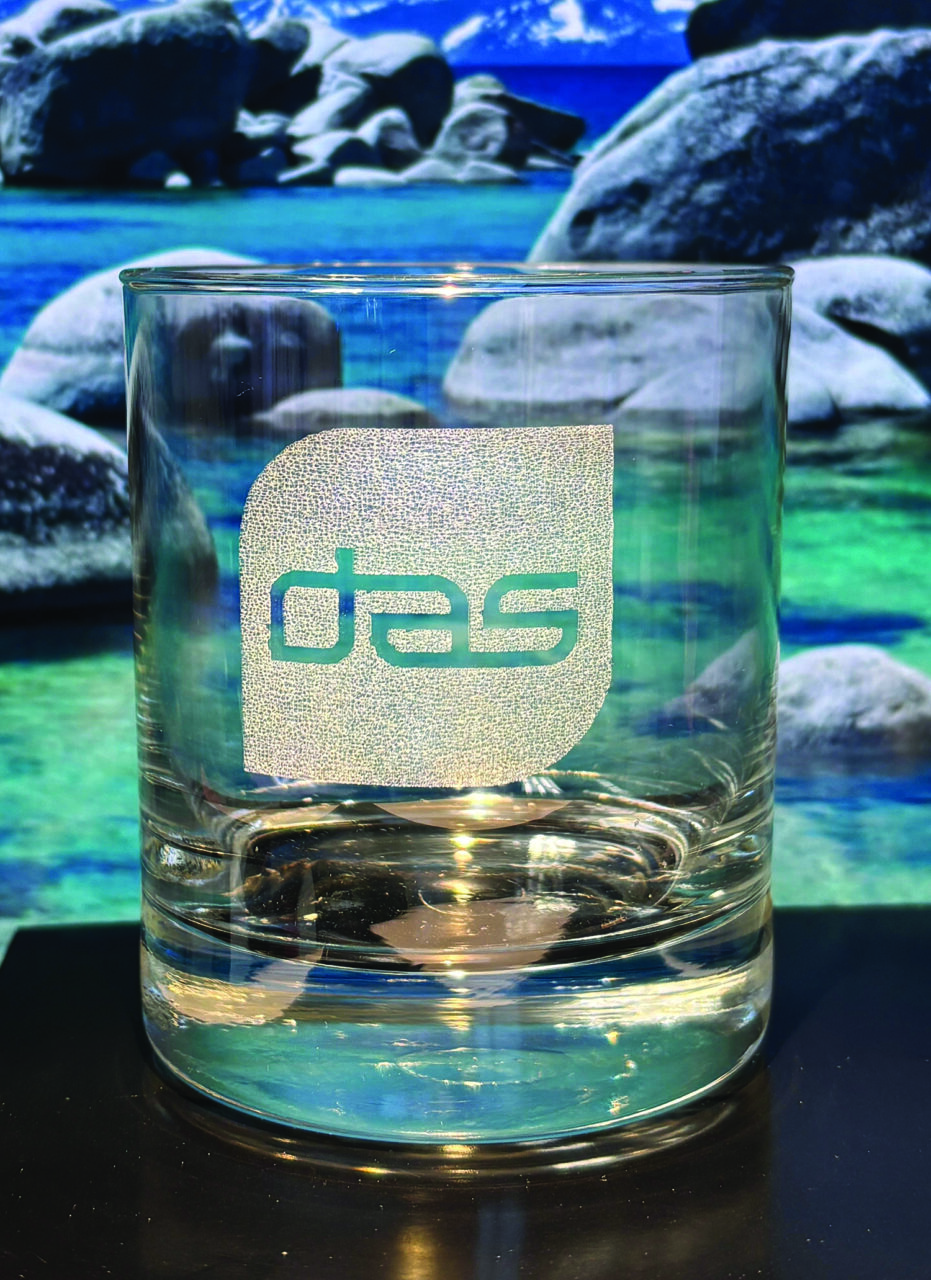
Other customizable drinkware, like water bottles and cocktail glasses, are strong matches for small-format engraving.
New Innovations
Emerging tech is making small format even more accessible. Epilog’s innovations, such as Fusion IRIS HD+ camera technology for precise artwork placement on irregular items, browser-based control via Epilog Pulse to send jobs from any device, and PrintAPI for workflow automation, help businesses scale efficiently.
For retailers considering the category, sources recommend looking beyond entry price.
“The difference isn’t just price; it’s reliability, workflow, and the scalability of the business model,” Agrahar says. “Entry-level systems often use fragile DC glass tubes and manual focus, which is better for hobbyists. Advanced ones use RF metal tubes and automatic focusing for retail reliability. First, figure out what market segment you want to expand into and get the right small-format laser engraver for that purpose.”
At a time when customers expect short turnaround and detailed customization for special gifts, small-format personalization gives retailers a practical way to stay competitive. For shops looking to expand production, improve turnaround times, and keep more profitable work in-house, this is an opportunity to build a more agile business.
School awards have long been a major profit center for retailers. Team sports are often the first category businesses consider when working with schools, but personalization can extend beyond tournament trophies and student awards.
Staff, students, and parents alike now see recognition as an ongoing effort that acknowledges the entire community rather than just a single sport or team.
By leveraging this community mindset, retailers can expand their offerings for schools and drive more recurring revenue with practical products that celebrate school spirit year-round.
Connecting with Buyers
Finding the right decision-makers to pitch these new product ideas to at a school can be approached from a few different perspectives, including a top-down approach and a bottom-up strategy.
“Start with the school’s activity director,” Dave Haan, marketing manager, JDS Industries, recommends. “They will know who leads every team and group in the school.”
That director will typically know which groups or clubs need awards at the school and whom to speak with. Haan notes that even if it’s not an immediate sale, developing rapport with top school administrators can pay dividends in the long run.
For the bottom-up approach, retailers may need to conduct additional research to identify who is affiliated with the school and how to reach them. Connie Tsang of Time Products International suggests considering everyone from students to school board members to event and promotion organizers.
Contacting a school online is a simple way to get started and identify the right contacts. Generally, most school sites will have a list of key email and phone contacts for advisers and activity directors.
“Introduce yourself, briefly explain what you do, and ask who handles awards and spirit gear for the group,” adds Haan. “Once you have the decision-makers’ contact info, you’re in business.”