While UV printing officially debuted in the early 1970s as a viable industrial method for printing barcodes and packaging labels, the technology didn’t reach elevated commercial wide-format and promotional-printing capabilities until decades later.
“Early UV systems were often cost prohibitive and geared toward high-volume production environments, whereas today’s equipment offers improved reliability, expanded material compatibility, and a lower barrier to entry,” says Jackie Faeth, marketing coordinator at The Rowmark Group.
As companies reimagine and redefine the act of corporate gift giving, the graphics and promotional products industry is called to raise the bar in choice, quality, and convenience.
Variety Is the Spice of Life
Modern UV printing, also referred to as direct-to-object (DTO) printing, utilizes UV light to cure ink on various substrates. The result is a durable, vibrant full-color finish that is dry to the touch, making it a popular choice for a wide variety of substrates in signage, packaging, labeling, and industrial printing.
According to Faeth, versatility is one of the technology’s greatest strengths. From acrylic, metal, and wood to glass, faux leather, and plastics, UV printing allows shop owners to instantly customize, print, and cure on most hard and flexible surfaces. Furthermore, the technology excels at special effects like spot gloss, tactile raised textures, and layered artwork, which are difficult to achieve with many traditional decoration methods.
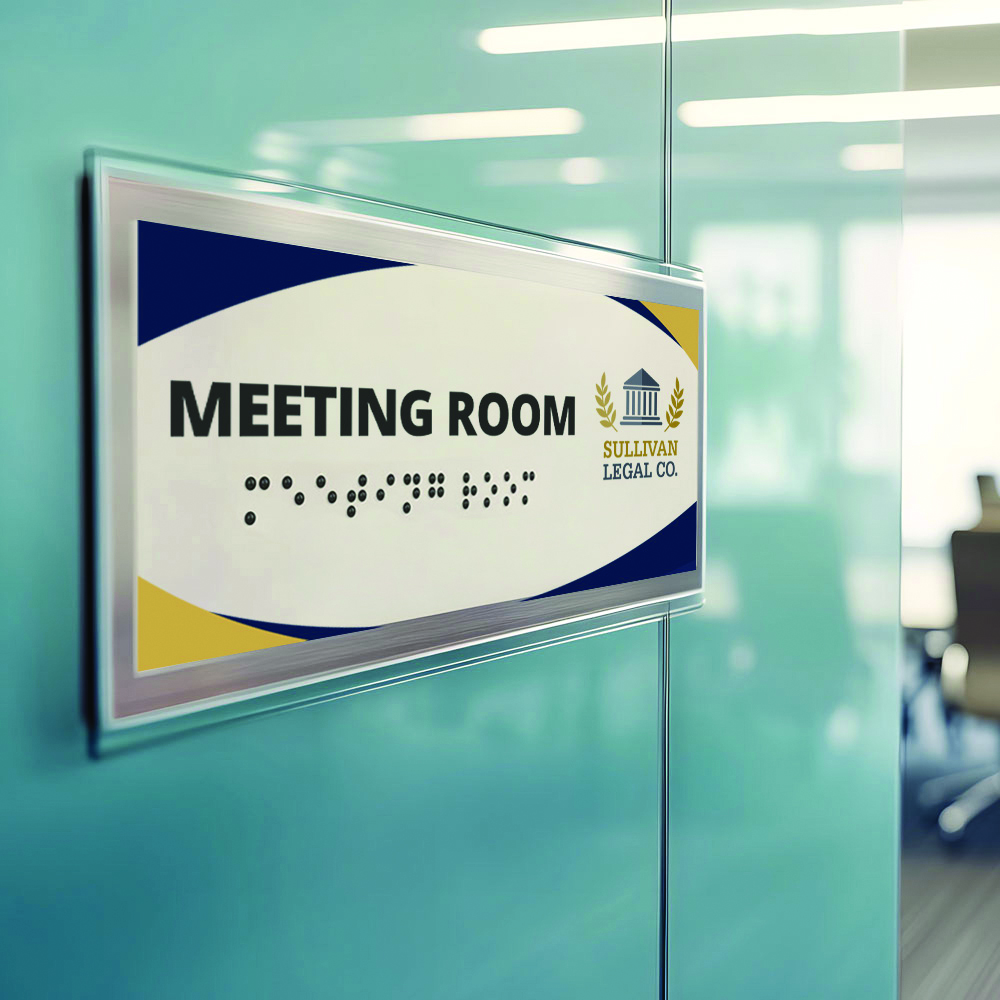
In addition to producing branded office decor, ADA-compliant products, and full-color industrial signage, UV printing helps diversify a shop’s corporate catalog. The technology’s versatility can be used to customize a variety of personalized products, from employee-recognition and client relationship-building and retention efforts to service or event promotion.
The cured ink forms a scratch-proof and fade-resistant barrier that helps meet the need for long-lasting products. Retailers can create everything from high-end apparel and company-branded electronics to premium glassware and tumblers as well as executive nameplates, desktop accessories, and awards and plaques that will endure longer than some other ink-based printing methods.
Top-quality leather patches are another example. Emblems are often associated with laser engraving but can also be produced with UV printing. Rather than a laser engraver removing material to create depth, a UV printer can build up layers of clear varnish to create raised lettering or simulated textures like wood grain and leather stitching.
Looking ahead, Faeth says decorative acrylic products, layered signage, textured awards, and specialty gift items featuring tactile effects are expected to gain in popularity.
Outstanding versatility in materials, surfaces, and effects presents corporate clients with a bevy of premium gift-giving options that can be produced quickly and efficiently, proving profitable for business owners yet still cost-effective for clients. As a result, corporate customers can create highly detailed and tactile branded merchandise without compromising their brand identities or tight marketing deadlines.
Combining Forces to Maximize Capabilities
While UV printing is a powerful stand-alone technology, it can also be used in mixed-media techniques to create standout products for corporate clients.
Faeth points to methods like combining engraving with UV color fills or laser-cut acrylic with UV for premium products.
Lon Riley, founder and CEO at DPI Laboratory, also notes that the digital nature of UV printing means less tooling and setup than traditional decoration methods.
As such, shop owners can expand into new markets and kick-start multiple revenue streams while streamlining operations. That opportunity also reduces inventory overhead and minimizes outsourcing, while enhancing the customer experience from the very first touchpoint and producing an abundance of high-margin custom goods at lightning speed.
Meanwhile, customers reap the benefits of choice, impeccable detail, and exceptional print quality at a competitive price point.
“Corporate clients are all about show me what you can do,” says Riley. “With the right UV setup, business owners gain a competitive advantage in demo, sample, and final production. The technology offers nice color control, which is important for corporate clients with logos and brand identities to consider.”
Plus, if retailers can produce small quantities economically, their corporate clients may be more open to more highly customized products previously considered unaffordable, Faeth suggests.
As the equipment becomes more accessible, Faeth and Riley agree shops of all sizes have been able to implement UV-printing capabilities. Today, systems ranging from desktop models to production-focused printers are making UV printing more attainable than ever. They encourage decorators to start with a focused product offering, develop a strong sample portfolio, and expand as demand grows.
Solve a Problem, Tell a Story
Breathing life and meaning into a brand is where the magic happens. While selling a physical product is transactional, solving a customer’s problem is transformational. Riley notes common issues like low employee morale, poor customer retention, and low brand loyalty as opportunities for retailers to open the door with high-quality UV-printed products.
Riley encourages retailers to lean into the technology’s vast capabilities to present real solutions that simultaneously wow customers with exclusive options. Textures, varnish effects, and distinctive product choices help tell a story and create value, he adds.
“If you can provide detailed samples to prospective clients, which is easy and cost-effective to do with UV printing, then creative ideas and possibilities are sure to flow—increasing chances of landing the client,” he says, suggesting decorators add their own branding to the samples as well, especially with leave-behinds.
One-Stop Shop
As corporate buyers steer clear of generic low-quality promotional products, experts suggest positioning your business as a leader in comprehensive branded-gifting programs with personalization, presentation, packaging, and speed built into the experience.
Growth is in “the coordinated experience” that corporate clients increasingly expect when they spend $50, $100, or $200 per recipient on a sales kickoff, a client appreciation initiative, or an executive welcome package, according to Michele Choate, vice president of marketing at LogoJET.
She says traditional packaging suppliers often avoid the work because quantities are too small and personalization is too complex. Retailers without UV DTO capability can produce the products but not the full coordinated program. Meanwhile, many brand-side marketing teams want to bring gifting in-house but lack the production equipment, sourcing relationships, and workflow expertise the promotional products industry has spent decades building.
“This leaves a massive opening for the supplier who can deliver the entire solution,” she says, noting the companies slated to win are the ones investing in UV direct-to-object production supported by scalable tray ecosystems and reliable blank-media sourcing for boxes, tins, inserts, and presentation packaging.
Sophisticated UV technology is the answer, shifting a company from a product decorator into a production partner capable of delivering scalable branded experiences on demand.
“For promotional products companies, that means [crafting] the entire deliverable—the items, the boxes, the inserts, the hangtags, and the nameplates can all be produced in-house, on one piece of equipment, in a coordinated run,” Choate says.
Choate adds that organizations that invest in that full set of solutions will help define the next phase of corporate gifting and promotional products.
While it can be a daunting challenge to consider, sources agree that retailers should consider owning the entire gifting workflow if they want to stay competitive and offer buyers enticing solutions.