
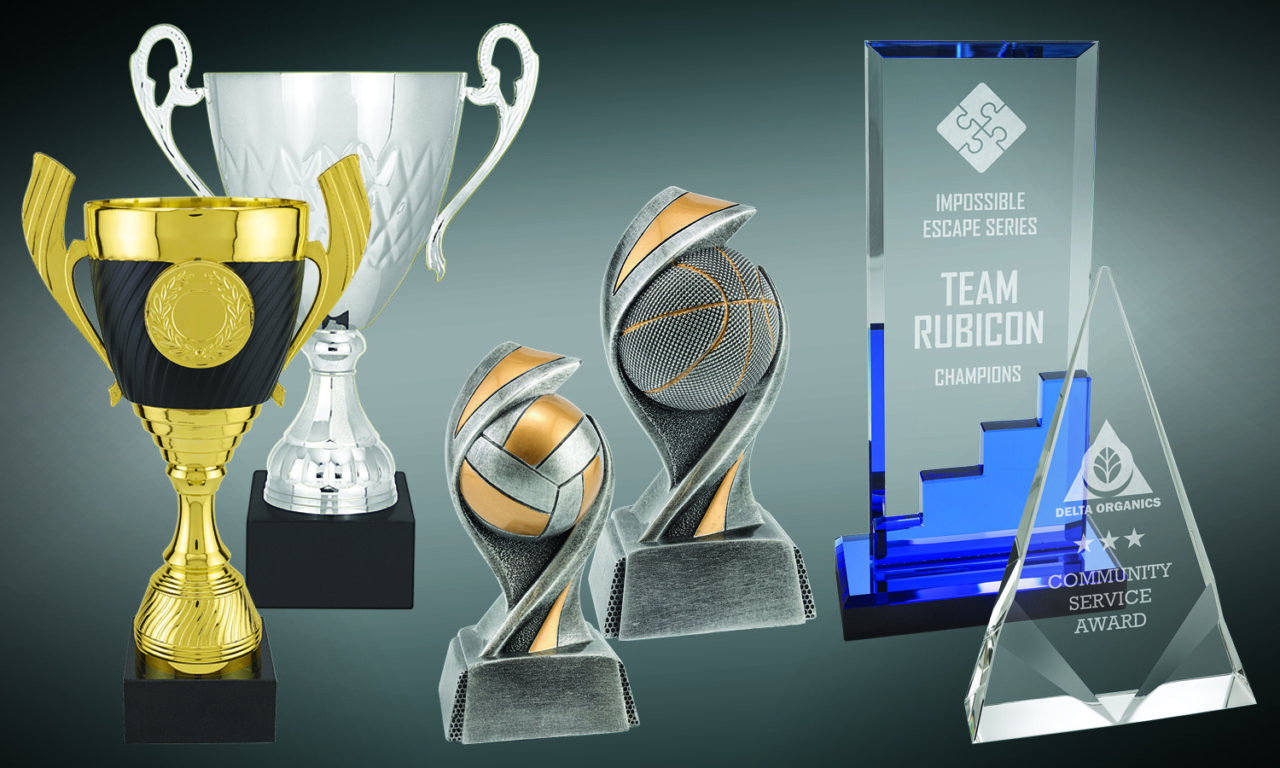
School awards have long been a major profit center for retailers. Team sports are often the first category businesses consider when working with schools, but personalization can extend beyond tournament trophies and student awards.
Staff, students, and parents alike now see recognition as an ongoing effort that acknowledges the entire community rather than just a single sport or team.
By leveraging this community mindset, retailers can expand their offerings for schools and drive more recurring revenue with practical products that celebrate school spirit year-round.
Connecting with Buyers
Finding the right decision-makers to pitch these new product ideas to at a school can be approached from a few different perspectives, including a top-down approach and a bottom-up strategy.
“Start with the school’s activity director,” Dave Haan, marketing manager, JDS Industries, recommends. “They will know who leads every team and group in the school.”
That director will typically know which groups or clubs need awards at the school and whom to speak with. Haan notes that even if it’s not an immediate sale, developing rapport with top school administrators can pay dividends in the long run.
For the bottom-up approach, retailers may need to conduct additional research to identify who is affiliated with the school and how to reach them. Connie Tsang of Time Products International suggests considering everyone from students to school board members to event and promotion organizers.
Contacting a school online is a simple way to get started and identify the right contacts. Generally, most school sites will have a list of key email and phone contacts for advisers and activity directors.
“Introduce yourself, briefly explain what you do, and ask who handles awards and spirit gear for the group,” adds Haan. “Once you have the decision-makers’ contact info, you’re in business.”
Showcasing and Offering Products
Even after connecting online, sources agree that booking a face-to-face meeting is key.
“An in-person meeting is the best way to showcase the quality of the products,” says Tsang, pointing to the tactile quality and color detail that help sell awards.
Price point can also help determine if an in-person consultation is crucial. Higher-priced items typically work better when pitched face-to-face since it’s a stronger way to explain the overall value of the products you’re selling, Haan notes.
“Showing examples will always make it easier for faculty members and booster parents to make decisions, especially if they need the buy-in of a group,” states Haan.
Matching Price Points
Even though school budgets are notoriously tight, sources recommend that retailers continue to offer a full range of products rather than limit the lineup to lower-priced items. Similar to what retailers might offer their other customers, Haan recommends the good, better, best tiered system to present a more diverse offering:
• Good: Closest to a customer’s budget and meets their needs.
“This option shows you are listening and delivers an option they can feel good about,” adds Haan.
• Better: A small increase in price, beyond the specified customer’s budget, but still attainable.
“More importantly, it’s an option they didn’t ask for,” contends Haan. “It’s a surprise, and it looks so good they have a hard time saying no to it.”
• Best: The highest-priced option, which won’t always resonate with customers but can sometimes open up opportunities that weren’t there previously. It may uncover a larger budget the school hadn’t previously disclosed or increase the perceived value of the better option.
Tsang also recommends that retailers seek an outside perspective if they’re looking to expand this category.
“Be creative and think outside of the box to offer more alternatives other than the traditional awards,” she notes. “Work closely with your suppliers for alternative products.”
Products That Resonate
For impactful awards, Tsang says personalized, functional products, such as desk clocks and paperweights, can be an excellent option for offering schools recognition products beyond the usual sports awards.
These items are also suitable for adult recipients, including administrators, teachers, and coaches.
Haan also suggests that retailers should connect with the personality of the employee to whom the item is being awarded.
“For one staff member, it might be an acacia serving board with white pearl resin,” he elaborates. “For another, it could be a cross-body bag or a hat that commemorates a special team or season. Whether it’s customized wind chimes, team photos printed on ChromaLuxe, or an authentic surplus U.S. Army ammo can, it’s important to remind customers they should match the product to the person receiving it.”
Regarding booster clubs and parents, both Tsang and Haan suggest products that can be displayed with the achievements and school name. This could range from simple items such as yard signs and sublimated stadium chairs to insulated drinkware and team photos on printed banners.
“Introducing new options is important, but every year a new group of students, parents, and grandparents join the team for the first time,” says Haan. “They’ll be interested in the products they see others using, the same products you’ve been selling for years.”
Newer Trends
One of the more significant shifts in school awards has been the increased appreciation for teachers, administrators, staff, and coaches since the pandemic.
“We need to pay more attention to each other and emphasize team support because we are more distanced, separated with less interaction since the pandemic,” stresses Tsang.
Newer products that have been driving this heightened appreciation of staff include wearable goods, such as headwear.
“Hats and patches have been on an upswing for 18 to 24 months with no sign of slowing down,” notes Haan. “Smooth bright-white substrates are very popular for UV printing.”
Haan says the shift to patches and headwear presents a perfect opportunity for the good, better, best approach, since retailers can offer multiple customized patch options: heat-transfer vinyl (good), sublimated patches (better), and laser-engraved or UV-printed hats (best).
Making Everyone Feel Special
By providing schools with fresh guidance on personalized recognition products for staff, organizers, and students, retailers can not only build a new revenue stream but also demonstrate their ability to meet new expectations from administrators.
“Everyone who works hard deserves recognition and encouragement,” says Tsang. “It’s equally important to recognize team achievements with individual rewards since it promotes unity, team spirit, and boosts the overall morale.”
Haan also suggests that while establishing new inroads with schools can take time, it’s worth the overall effort.
“Soon, customers will become advocates, referring you to more decision-makers with other schools, clubs, and teams,” he notes.
And ultimately, stepping outside of traditional sports awards means retailers can offer schools personalized products all year round.